
.jpg)
Case Series/Study
Peristomal complications can significantly impair quality of life, leading to skin breakdown, leakage, infection, odor, pain, and discomfort. Timely and effective wound management is essential to reduce morbidity and improve patient outcomes.
The objective of this case series was to evaluate the effectiveness of chitosan* dressing in managing peristomal wound complications of various origin and wounds at other sites.
Methods:
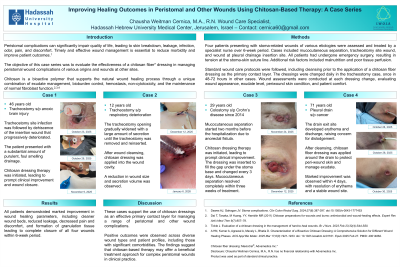
Four patients presenting with stoma-related wounds of various etiologies were assessed and treated by a specialist nurse over 6-week period. Cases included mucocutaneous separation, tracheostomy site wound and wound at pleural drainage insertion site. All patients had undergone emergency surgery, resulting in tension at the stoma-skin suture line. Additional risk factors included malnutrition and poor tissue perfusion.
Standard wound care protocols were followed, including cleansing prior to the application of chitosan dressing as the primary contact layer. The dressings were changed daily in tracheostomy case, once in 48-72 hours in other cases. Chitosan* is a bioactive material that accelerates the natural healing process through a unique combination of hemostatic, antibacterial, and tissue-regenerative properties. Wound assessments were conducted at each dressing change, evaluating wound appearance, exudate level, periwound skin condition, and patient comfort.
Results:
All patients demonstrated marked improvement in wound healing parameters, including cleaner wound beds, reduced leakage, decreased pain and discomfort, and formation of granulation tissue leading to complete closure of all four wounds in 6-week period.
Discussion:
These cases support the use of chitosan* dressings as an effective primary contact layer for managing a range of peristomal and other wound complications.
Positive outcomes were observed across diverse wound types and patient profiles, including those with significant comorbidities. The findings suggest that chitosan*-based therapy may offer a beneficial treatment approach for complex peristomal wounds in clinical practice.