
.jpg)
Case Series/Study
Surgical wounds in the gluteal crease and upper thigh present management challenges due to moisture, friction, contouring, and difficulty maintaining a consistent wound environment. These factors, combined with comorbid lymphedema and lipedema, impair local tissue resilience and contribute to delayed healing. This case describes the integration of a multifunctional collagen-based antimicrobial dressing (containing collagen, CMC, alginate, EDTA, and ionic silver) combined with negative pressure wound therapy (NPWT) in a chronic surgical wound demonstrating mild infection and moderate exudate.
Methods:
A 54-year-old female presented with an 8-week-old non-healing surgical wound on the right gluteal crease/thigh. Prior wound management with Betadine-soaked gauze packing failed to produce improvement, and the patient exhibited moderate drainage with mild signs of infection. Chronic lymphedema and lipedema contributed to periwound edema and anatomical challenges. Treatment was transitioned to a collagen–CMC–alginate–EDTA–silver dressing to support protease modulation, bioburden control, and moisture balance. This was paired with NPWT which provided the micro and macro strain to support the wound’s reparative contraction processes.
Results:
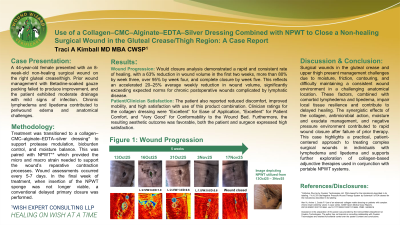
Wound assessments occurred every 5-7 days. Would closure analysis demonstrated a rapid and consistent rate of healing, with a 63% reduction in wound volume in the first two weeks, more than 80% by week three, over 95% by week four, and complete closure by week five. In the final week of treatment, when insertion of the NPWT sponge was no longer viable, a conventional delayed primary closure was performed. This reflects an accelerated 20–25% average weekly reduction in wound volume, significantly exceeding expected norms for chronic postoperative wounds complicated by lymphatic disease. The patient also reported reduced discomfort, improved mobility, and high satisfaction with use of this product combination. Clinician ratings for the collagen dressing were “Excellent” for Ease of Application, “Excellent” for Patient Comfort, and “Very Good” for Conformability to the Wound Bed. Furthermore, the resulting aesthetic outcome was favorable, both the patient and surgeon expressed high satisfaction.
Discussion:
The combination of a collagen–CMC–alginate–EDTA–silver dressing with NPWT resulted in efficient resolution of a chronic surgical wound located in an anatomically challenging region. The synergistic effects of the collagen, antimicrobial action, moisture and exudate management, and negative pressure environment contributed to rapid wound closure after failure of prior therapy. This case highlights a practical, patient-centered approach to treating complex surgical wounds in individuals with lymphedema and lipedema and supports further exploration of collagen-based adjunctive therapies used in conjunction with portable NPWT systems.