
.jpg)
Case Series/Study
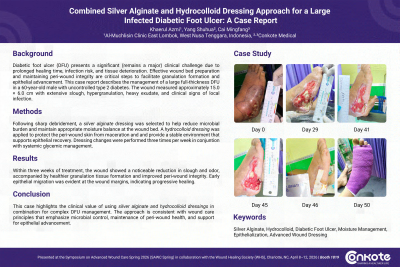
Diabetic foot ulcer (DFU) presents a significant(remains a major) clinical challenge due to prolonged healing time, infection risk, and tissue deterioration. Effective wound bed preparation and and maintaining peri-wound integrity are critical steps to facilitate granulation formation and epithelial advancement. This case report describes the management of a large full-thickness DFU in a 60-year-old male with uncontrolled type 2 diabetes. The wound measured approximately 15.0 × 6.0 cm with extensive slough, hypergranulation, heavy exudate, and clinical signs of local infection.
Methods:
Following sharp debridement, a silver alginate dressing was selected to help reduce microbial burden and maintain appropriate moisture balance at the wound bed. A hydrocolloid dressing was applied to protect the peri-wound skin from maceration and and provide a stable environment that supports epithelial recovery. Dressing changes were performed three times per week in conjunction with systemic glycemic management.
Results:
Within three weeks of treatment, the wound showed a noticeable reduction in slough and odor, accompanied by healthier granulation tissue formation and improved peri-wound integrity. Early epithelial migration was evident at the wound margins, indicating progressive healing.
Discussion:
This case highlights the clinical value of using silver alginate and hydrocolloid dressings in combination for complex DFU management. The approach is consistent with wound care principles that emphasize microbial control, maintenance of peri-wound health, and support for epithelial advancement.