
.jpg)
Case Series/Study
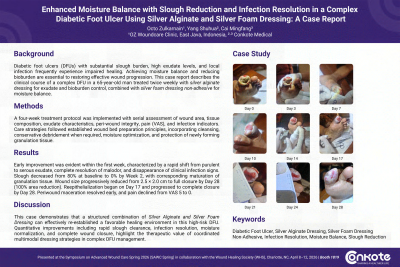
Diabetic foot ulcers (DFUs) with substantial slough burden, high exudate levels, and local infection frequently experience impaired healing. Achieving moisture balance and reducing bioburden are essential to restoring effective wound progression. This case report describes the clinical course of a complex DFU in a 65-year-old man treated twice weekly with silver alginate dressing for exudate and bioburden control, combined with silver foam dressing non-adhesive for moisture balance.
Methods:
A four-week treatment protocol was implemented with serial assessment of wound area, tissue composition, exudate characteristics, peri-wound integrity, pain (VAS), and infection indicators. Care strategies followed established wound bed preparation principles, incorporating cleansing, conservative debridement when required, moisture optimization, and protection of newly forming granulation tissue.
Results:
Early improvement was evident within the first week, characterized by a rapid shift from purulent to serous exudate, complete resolution of malodor, and disappearance of clinical infection signs. Slough decreased from 80% at baseline to 0% by Week 2, with corresponding maturation of granulation tissue. Wound size progressively reduced from 2.5 × 2.0 cm to full closure by Day 28 (100% area reduction). Reepithelialization began on Day 17 and progressed to complete closure by Day 28. Periwound maceration resolved early, and pain declined from VAS 5 to 0.
Discussion:
This case demonstrates that a structured combination of Silver Alginate and Silver Foam Dressing can effectively re-established a favorable healing environment in this high-risk DFU. Quantitative improvements including rapid slough clearance, infection resolution, moisture normalization, and complete wound closure, highlight the therapeutic value of coordinated multimodal dressing strategies in complex DFU management.