
.jpg)
Case Series/Study
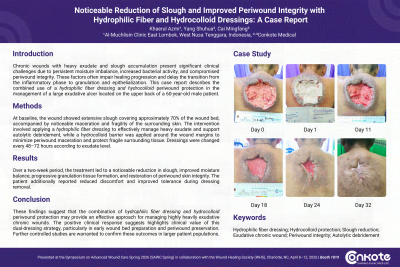
Chronic wounds with heavy exudate and slough accumulation present significant clinical challenges due to persistent moisture imbalance, increased bacterial activity, and compromised periwound integrity. These factors often impair healing progression and delay the transition from the inflammatory phase to granulation and epithelialization. This case report describes the combined use of a hydrophilic fiber dressing and hydrocolloid periwound protection in the management of a large exudative ulcer located on the upper back of a 60-year-old male patient.
Methods:
At baseline, the wound showed extensive slough covering approximately 70% of the wound bed, accompanied by noticeable maceration and fragility of the surrounding skin. The intervention involved applying a hydrophilic fiber dressing to effectively manage heavy exudate and support autolytic debridement, while a hydrocolloid barrier was applied around the wound margins to minimize periwound maceration and protect fragile surrounding tissue. Dressings were changed every 48–72 hours according to exudate level.
Results:
Over a two-week period, the treatment led to a noticeable reduction in slough, improved moisture balance, progressive granulation tissue formation, and restoration of periwound skin integrity. The patient additionally reported reduced discomfort and improved tolerance during dressing removal.
Discussion:
These findings suggest that the combination of hydrophilic fiber dressing and hydrocolloid periwound protection may provide an effective approach for managing highly heavily exudative chronic wounds. The positive clinical response suggests highlights clinical value of this dual-dressing strategy, particularly in early wound bed preparation and periwound preservation. Further controlled studies are warranted to confirm these outcomes in larger patient populations.