(CS-046) Management of Complex Wounds with a Bioresorbable Antimicrobial Matrix in Patients at Risk for Delayed Healing
Friday, April 10, 2026
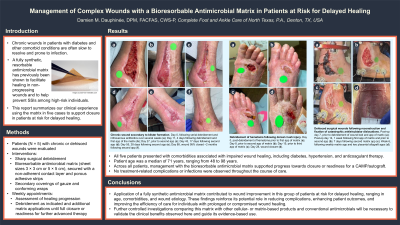
Introduction: Chronic wounds in patients with diabetes and other comorbid conditions are often slow to resolve and prone to infection. A fully synthetic, resorbable antimicrobial matrix has previously been shown to facilitate healing in non-progressing wounds and to help prevent surgical site infections among high-risk individuals. This report summarizes our clinical experience using the matrix in five cases to support closure in patients at risk for delayed healing.
Methods: Five patients with chronic or dehisced wounds underwent sharp surgical debridement followed by application of the bioresorbable antimicrobial matrix. Sheet size (3 × 3 cm or 5 × 5 cm) was selected based on wound dimensions. The material was secured with a non-adherent contact layer and porous adhesive strips, with secondary coverings consisting of combinations of gauze and conforming wraps. At weekly appointments, wounds were assessed for healing progression, debrided as indicated, and managed with additional matrix applications until full closure or readiness for further advanced therapy was achieved.
Results: All five patients presented with comorbidities commonly associated with impaired wound healing, including diabetes, hypertension, and anticoagulant therapy. Patient age was a median of 71 years, ranging from 48 to 98 years. Across all patients, wound management with the bioresorbable antimicrobial matrix supported progress towards closure or readiness for another CAMP/autograft. No treatment-related complications or infections were observed throughout the course of care.
Discussion: Application of a fully synthetic antimicrobial matrix contributed to wound improvement in this group of patients at risk for delayed healing,ranging in age, comorbidities, and wound etiology. These findings reinforce its potential role in reducing complications, enhancing patient outcomes, and improving the efficiency of care for individuals with prolonged or compromised wound healing.Further controlled investigations comparing this matrix with other cellular- or matrix-based products and conventional antimicrobialswill be necessary to validate the clinical benefits observed here and guide its evidence-based use.

.jpg)