
.jpg)
Practice Innovations
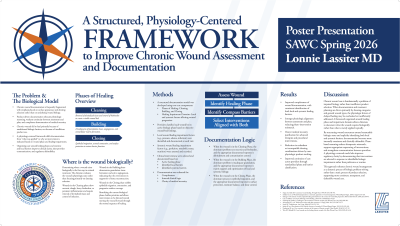
Chronic wound care is fundamentally a problem of impaired biology rather than product selection. When documentation and treatment planning are driven by dressing categories and wound types, physiologic drivers of delayed healing may be overlooked or insufficiently addressed. A framework organized around healing phase and impairment domains allows clinicians to document what the wound requires biologically rather than what is applied topically.
By structuring wound encounters around measurable biologic states and explicitly identifying local and systemic barriers, documentation becomes more consistent and defensible. Phase-based reasoning reduces therapeutic mismatch, supports sequencing of interventions, and strengthens provider communication. A physiology-centered model improves regulatory clarity by demonstrating that interventions are selected in response to identifiable biologic impairments rather than preference or routine.
This approach reframes chronic wound management as a dynamic process of biologic problem-solving rather than a static process of product selection, supporting consistent, transparent, defensible wound care.