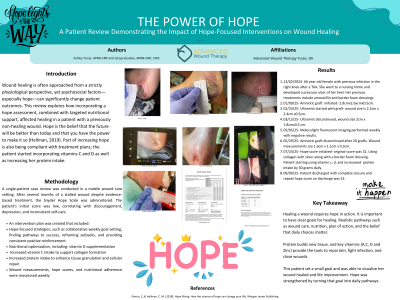
Introduction: Wound healing is often approached from a strictly physiological perspective, yet psychosocial factors—especially hope—can significantly change patient outcomes. This review explores how incorporating a hope assessment, combined with targeted nutritional support, affected healing in a patient with a previously non-healing wound. Hope is the belief that the future will be better than today, and that you have the power to make it so (Hellman, 2019). Because nutritional adequacy is essential for tissue repair, vitamin D, vitamin C, and increased dietary protein were included alongside hope-focused strategies to support overall wound healing.
Methods:
Methods: A single-patient case review was conducted in a mobile wound care setting. After several weeks of a stalled wound despite evidence-based treatment, the Snyder Hope Scale was administered. The patient’s initial score was low, correlating with discouragement, depression, and inconsistent self-care. An intervention plan was created that included: • Hope-focused strategies, such as collaborative weekly goal setting, finding pathways to success, reframing setbacks, and providing consistent positive reinforcement. • Nutritional optimization, including: - Daily vitamin D supplementation - Increased vitamin C intake to support collagen formation - Increased protein intake to enhance tissue granulation and cellular repair Wound measurements, hope scores, and nutritional adherence were reassessed weekly.
Results:
Results: Within several weeks, the patient’s hope score increased significantly, reflecting improved motivation and engagement in the healing process. During the same period, the wound demonstrated progressive granulation, improved tissue quality, reduction in size, and eventual closure. Importantly, no changes were made to the topical or systemic wound treatment plan, highlighting the potential effect of psychosocial and nutritional interventions alone.
Discussion: Discussion This case underscores the value of a holistic approach in chronic wound management. The combination of hope-building strategies with vitamin D, vitamin C, and increased protein intake corresponded with improved healing and patient engagement. Integrating psychosocial support and basic nutritional reinforcement into routine wound care may enhance outcomes and deserves further study. Hope can be measured, taught, and strengthened. It is a skill, and like any skill, it grows with practice (Hellman, 2019).

.jpg)