
.jpg)
Practice Innovations
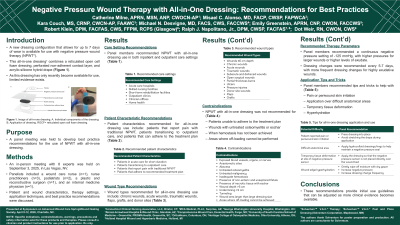
Introduction: A new dressing configuration is available for use with negative pressure wound therapy (NPWT). This all-in-one dressing combines a reticulated open cell foam dressing, perforated non-adherent contact layer, and acrylic-silicone hybrid drape. As this dressing has only recently become available for use, limited evidence exists.1
Objectives: A panel meeting was held to develop best practice recommendations for the use of NPWT with all-in-one dressing.
Methods:
Method: An in-person meeting with 8 experts was held on September 3, 2025 in Las Vegas, NV. Panelists included a wound care nurse (n=1), nurse practitioners (n=3), podiatrists (n=2), a plastic and reconstructive surgeon (n=1), and an internal medicine physician (n=1). Panel members discussed patient and wound characteristics, therapy settings, and application techniques, and developed best practice recommendations.
Results:
Outcomes: Panel members recommended NPWT with all-in-one dressing use in acute care hospitals, skilled nursing facilities, clinics, office visits, and home health. Wound types recommended for use included chronic wounds, acute wounds, traumatic wounds, subacute and dehisced wounds, partial-thickness burns, ulcers, flaps, grafts, and donor sites.
Discussion:
Discussion: Panel members recommended a negative pressure setting of -125 mmHg, with higher pressures for larger wounds or higher levels of exudate. Dressing changes were recommended every 5-7 days, with more frequent dressing changes for highly exudative wounds. NPWT with all-in-one dressing was not recommended for patients unable to adhere to the treatment plan, for wounds with untreated osteomyelitis or eschar, when hemostasis has not been achieved, fistulas, or in areas where off-loading cannot be performed. Panel members recommended pressing the dressing into place without stretching the drape during application, using hydrocolloid dressings/rings around toes to help maintain a negative pressure seal, and off-setting the NPWT trackpad to minimize the potential for tissue deformation. These recommendations provide initial use guidelines that can be adjusted as more clinical evidence becomes available.