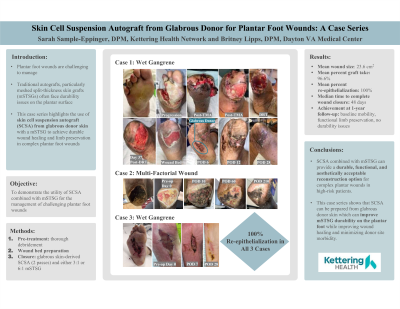
Introduction: Regardless of etiology, plantar foot wounds are among the most challenging to manage as these wounds are often complicated by mechanical forces, poor vascularity, and neuropathy. As a result, traditional autografts, particularly meshed split-thickness skin grafts (mSTSGs), often face durability issues on the plantar surface. Great emphasis should be placed on wound healing and functional limb preservation. This case series highlights the utilization of glabrous skin-derived skin cell suspension autograft (SCSA) combined with mSTSG to achieve durable wound closure and limb salvage in complex plantar foot wounds.
Methods: A retrospective chart review was conducted of 3 patients with complex plantar foot wounds and multiple co-morbidities. After thorough debridement and establishment of a well-vascularized wound bed, glabrous donor skin was harvested using a dermatome to prepare SCSA. The first pass was harvested at 0.020 inches and set aside for later use. A second pass at 0.008 inches was then harvested and processed for SCSA. The thicker first-pass graft was subsequently secured over the plantar surface donor site to serve as a biological dressing. The mSTSG donor site was harvested from either the calf or thigh and meshed at either a 3:1 or 6:1 mesh ratio.The cell suspension was applied over mSTSG for the plantar foot wounds. Data collected included patient demographics, wound etiology, percent graft take, percent re-epithelialization, time to healing, and long-term outcomes including graft durability and return to baseline functioning.
Results: Wound etiologies included 2 cases of wet gangrene and one case with multi-factorial causes involving vascular issues, diabetes, and pressure. The average wound size was 23.6 cm2. Mean percent graft take was 96.6% and percent re-epithelialization for all 3 patients was 100%. The median time to complete wound closure was 48 days. All 3 cases had achieved baseline mobility, functional limb preservation, and no durability issues were noted at their 1-year follow-up.
Discussion: Utilization of SCSA derived from glabrous skin in conjunction with mSTSG supported limb salvage in all cases. This approach may enhance graft durability on plantar surfaces, minimize donor site morbidity, and promote timely and robust wound healing.

.jpg)