
.jpg)
Practice Innovations
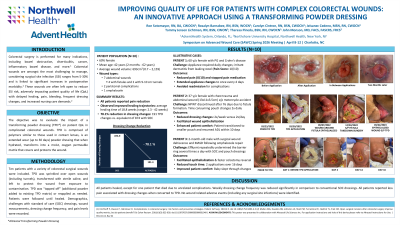
Colorectal surgery treats conditions such as obstruction, cancer, and inflammatory bowel disease.1 Resulting wounds are challenging, with SSI rates of 5–30% and notable morbidity.2 To reduce SSI risk, wounds are often left open, leading to delayed healing, pain, bleeding, frequent dressing changes, and increased nursing demands, all of which negatively affect quality of life (QoL).2 This case series evaluated whether a transforming powder dressing (TPD) could simplify management of complex colorectal wounds and improve quality of life.
Methods:
Wounds were treated with TPD, an extended-wear powder dressing that becomes a moist, protective, oxygen-permeable matrix when hydrated. TPD was applied to open wounds (including tunnels), activated with saline, and left in place for up to 30 days, with reapplication as needed. Patients were followed until healed. Demographics, wound size, dressing frequency, and pain were recorded.
Results:
Ten patients (60% female, ages 2 months to 62 years) with colorectal wounds were included. Seven had abdominal wounds (four with fistulas; two with 9–10 cm tunnels), two had peristomal complications, and one had omphalocele. Average wound volume was 693.3 cm³ (range 0.7–2,159.4 cm³). Except for one patient that died due to unrelated complications, all patients healed in an average of 18.8 weeks (range 2.3–42) with no SSIs or readmissions. Dressing changes decreased by 78.1% (191.4 vs. an estimated 873.9 with SOC). All adult patients reported less pain and greater satisfaction with TPD compared to prior dressings.
Discussion:
TPD use in complex colorectal wounds was associated with reduced pain, improved patient comfort, fewer dressing changes, and no SSIs or other complications. TPD provides a valuable alternative for treatment of challenging colorectal wounds.