
.jpg)
Evidence-Based Practice
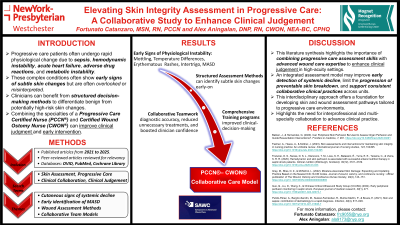
Patients in progressive care often undergo rapid physiological changes due to sepsis, hemodynamic instability, acute heart failure, adverse drug reactions, and metabolic instability. These conditions usually exhibit early signs through subtle skin changes, but these findings are frequently misinterpreted or overlooked. Evidence indicates that clinicians can benefit from structured decision-making methods to distinguish between benign skin changes and potentially high-risk skin changes. Combining thorough physiological assessments, typical in progressive care, with specialized knowledge from wound and ostomy specialists can improve clinical judgment and encourage timely action.
Methods:
This evidence-based literature review gathered recent literature from the past five years related to cutaneous signs of systemic decline, early identification of moisture-related and irritant skin conditions, wound assessment methods, and collaborative teamwork models. The databases searched included OVID, PubMed, and the Cochrane Library, using terms such as skin assessment, progressive care, clinical collaboration, and clinical judgment. Peer-reviewed articles were evaluated for their relevance to high-acuity patients in progressive care, identification of early cutaneous changes, and promotion of collaborative teamwork.
Results:
The findings showed that alterations in skin integrity, such as skin discolorations, temperature changes, erythematous rashes, intertrigo, and early moisture-related skin damage (MASD), may indicate early signs of physiological instability. Evidence supports that clinicians using structured assessment methods can more accurately identify cutaneous manifestations and respond to rapidly evolving skin integrity alterations more quickly. Collaborative teamwork with wound specialists improved diagnostic accuracy, reduced unnecessary treatments, and boosted clinician confidence in understanding complex skin conditions. Training programs that combine physiological assessment, comprehensive skin and wound assessment, and a collaborative case-based approach continually showed improvements in clinical decision-making.
Discussion:
This synthesis highlights the importance of combining progressive care assessment skills with advanced wound care expertise to enhance clinical judgment in high-acuity settings. An integrated assessment model may improve early detection of systemic decline, limit the progression of preventable skin breakdown, and support consistent and collaborative clinical practices across units. This interdisciplinary approach offers a foundation for developing skin and wound assessment pathways tailored to progressive care environments and emphasizes the need for collaboration between specialties to advance clinical practice.