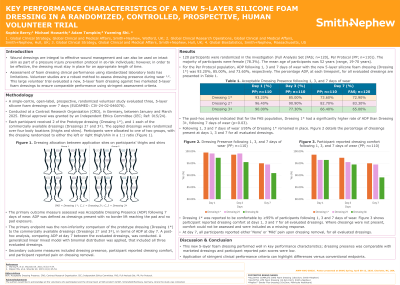
(CR-006) Key performance characteristics of a new 5-layer silicone foam dressing in a randomized, controlled, prospective, human volunteer trial
Friday, April 10, 2026
Michael Howarth, MSc; Adam Tompkin, BSC (Hons); Yueming Shi, Master of Applied Statistics
Introduction: Assessment of foam dressing clinical performance using standardized laboratory tests has limitations. Volunteer studies are a robust method to assess dressing presence during wear1,2. This large volunteer trial evaluated a new, 5-layer foam dressing against two marketed 5-layer foam dressings for non-inferiority using stringent assessment criteria.
Methods: A single-centre, open-label, prospective, randomized volunteer study evaluated three, 5-layer silicone foam dressings over 7 days. All dressings were applied to participants’ thighs and shins (2 of Dressing 1* [n=240]; 1 each of marketed Dressings 2† and 3‡ [n=120 each]). The primary endpoint was Acceptable Dressing Presence (ADP; definition: dressing presence with no border lift, pad exposure, or tears) at day 7. Secondary endpoints included dressing presence, and participant reported pain on dressing removal.Newcombe’s score method (15% non-inferiority threshold) was utilized.
Results: For the Full Analysis Set (FAS; n=120), ADP (day 7) was 72.9%, 83.3% and 65.0%, and dressing presence (day 7) was 95.0%, 94.5% and 90.9%, for Dressings 1, 2 and 3, respectively. Post-hoc analysis (mixed logistic regression model) indicated that Dressing 1 had a significantly higher rate of ADP than Dressing 3 (p=0.03). At day 7, all participants reported either ‘None’ or ‘Mild’ pain upon dressing removal, for all dressings.
Discussion: This new 5-layer foam dressing performed well in key performance characteristics of dressing presence and low participant reported pain scores. Application of stringent clinical performance criteria can highlight differences versus conventional endpoints.

.jpg)