
.jpg)
Clinical Research
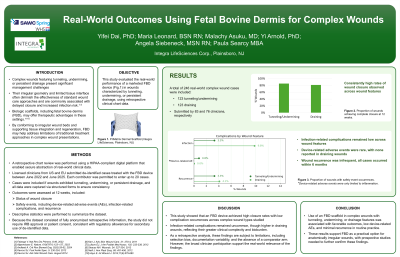
A retrospective chart review was conducted via a HIPAA-compliant digital platform for secure real-world data collection. Licensed clinicians abstracted de-identified cases involving the FBD device between June 2022 and June 2025 into structured forms. Each clinician could contribute up to 20 cases. Endpoints included wound closure at 12 weeks, adverse events (AEs), infection-related complications, and recurrence. Cases with tunneling, undermining, or drainage were analyzed descriptively. The study did not require IRB approval or consent, as data were anonymized and compliant with retrospective review regulations.
Results:
A total of 246 cases were reviewed, comprising 123 tunneled/undermined wounds and 123 draining wounds from 83 and 76 surgeons, respectively. At week 12, complete wound closure was observed in 85.4% of tunneled/undermined wounds and 81.3% of draining wounds. AEs casually related to the device were limited to inflammation in 0.8% of tunneled/undermined cases, with none reported in draining wounds. Infection-related complications occurred in 3.3% of tunneled/undermined wounds and 9.8% of draining wounds. Recurrence was observed in 3.3% of tunneled/undermined cases and 4.1% of draining cases.
Discussion:
This study demonstrated high closure rates and low complications, supporting the FBD device as a safe and effective option for managing complex wounds with anatomical irregularities or drainage, where traditional dressings may result in suboptimal outcome. Limitations include retrospective design and potential selection bias. Prospective studies are warranted to validate these findings.