
.jpg)
Practice Innovations
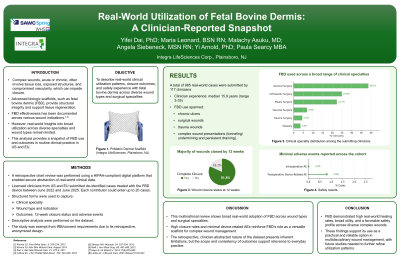
A retrospective chart review was conducted via a HIPAA-compliant digital platform for secure data collection. Clinicians submitted de-identified cases involving use of FBD in complex wound management between June 2022 and June 2025 (up to 20 cases per contributor). Data was abstracted from medical records into structured forms, capturing clinician specialties, wound type, and outcomes. The study was exempt from IRB and consent requirements due to its retrospective, anonymized design. Descriptive analysis was performed on chart review data across all wound types, including chronic ulcers (pressure, venous, diabetic), surgical wounds (donor sites, post-Mohs, post-laser), trauma-related wounds, and tunneled or draining wounds.
Results: A total of 985 cases were analyzed from 117 surgeons representing orthopedic, plastic, trauma, vascular, and general surgery specialties, as well as podiatry. General surgeons accounted for the largest share of contributors (38.5%), followed by orthopedic (24.8%) and plastic surgeons (22.2%), with smaller proportions in vascular, trauma, and podiatry (ranging from 3.4% to 6.8%). FBD was utilized across a variety of wound categories, including surgical wounds, trauma-related injuries, chronic ulcers, and wounds with complex features such as undermining, tunneling, and draining. Across all wounds, 81.8% of cases closed by 12 weeks. No intraoperative adverse events (AEs) were reported; postoperative device-related AEs were rare (≤0.8%).
Discussion:
This cross-sectional review highlights broad adoption of FBD across multiple surgical specialties and wound types in US and EU practices. High closure rates and minimal AEs confirm its effectiveness and safety in real-world settings as a versatile option for managing complex wounds.