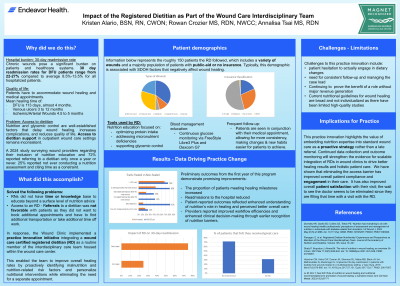
(PI-001) Impact of the Registered Dietitian as Part of the Wound Care Interdisciplinary Team
Friday, April 10, 2026
Rowan Crozier, MS RDN NWCC; Annalisa Tsai, MS RDN
Introduction: Chronic wounds pose a significant burden on patients and healthcare systems, and malnutrition is a well-established factor that delays wound healing, increases complications, and reduces quality of life. Despite strong evidence connecting nutritional status and healing outcomes, access to dietitian support in outpatient wound care settings remains inconsistent.
Methods: In response, the Wound Clinic implemented a practice innovation initiative integrating a registered dietitian (RD) as a routine member of the interdisciplinary care team housed within the wound care center. This initiative aimed to proactively identify malnutrition and nutrition-related risk factors, personalize nutritional interventions, and improve overall healing rates while eliminating the barrier of making and attending a separate appointment.
Starting in October of 2024, all patients underwent a nutritional assessment utilizing patient-reported screening. Patients identified as at-risk were seen regularly by the RD following their medical appointment, receiving an individualized nutrition care plan focused on optimizing protein intake, addressing micronutrient deficiencies, and supporting glycemic control when necessary. The RD participated in interdisciplinary team reviews to adjust plans in real time based on wound progress and patient adherence.
Results: Preliminary outcomes from the first year of this program demonstrate promising improvements. The proportion of patients meeting healing milestones increased, readmissions to the hospital reduced, and patient-reported outcomes reflected enhanced understanding of nutrition’s role in healing. Providers also reported improved workflow efficiencies and enhanced clinical decision-making through earlier recognition of nutrition barriers. Challenges included patient hesitation to engage in dietary changes and the need for consistent follow-up.
Discussion: This practice innovation highlights the value of embedding nutrition expertise into standard wound care as a proactive strategy rather than a late referral. Continued data collection and outcome monitoring will strengthen the evidence for scalable integration of RDs in wound clinics to drive better healing results and holistic patient care.

.jpg)