
.jpg)
Clinical Research
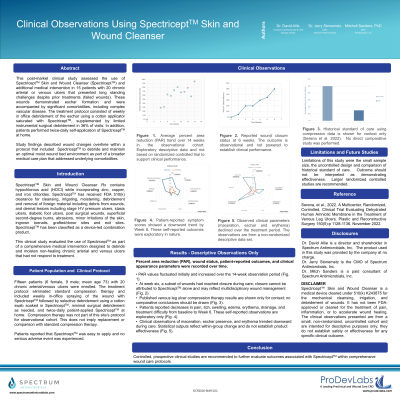
The treatment protocol consisted of weekly in office debridement of the eschar using a cotton applicator saturated with Skin Wound Cleanser (*), supplemented by limited instrumental surgical debridement in 36% of visits. In addition, patients performed twice-daily self-application of the Skin and Wound Cleanser at home.
Results:
Results- Descriptive Observations Only
Percent area reduction (PAR), wound status, patient-reported outcomes, and clinical appearance parameters were recorded over time.
• PAR values fluctuated initially and increased over the 14-week observation period (Fig. 1).
• At week six, a subset of wounds had reached closure during care; closure cannot be attributed to the Skin and Wound Cleanser (*) alone and may reflect multidisciplinary wound management (Fig. 2).
• Published venous leg ulcer compression therapy results are shown only for context; no comparative conclusions should be drawn (Fig. 3).
• Patients reported decreases in pain, itch, swelling, edema, erythema, drainage, and treatment difficulty from baseline to Week 6. These self-reported observations are exploratory only (Fig. 4).
• Clinical observations of maceration, eschar presence, and erythema trended downward during care. Statistical outputs reflect within-group change and do not establish product effectiveness (Fig. 5).
Discussion:
Controlled, prospective clinical studies are recommended to further evaluate outcomes associated with the Skin and Wound Cleanser (*) within comprehensive wound care protocols.