(CS-020) Refractory Neuropathic Foot Wounds in Comorbid Patients: Achieving Durable Closure and Function
Friday, April 10, 2026
Melina Butuci, PhD; sara shahbazi, PhD – MiMedx Group Inc
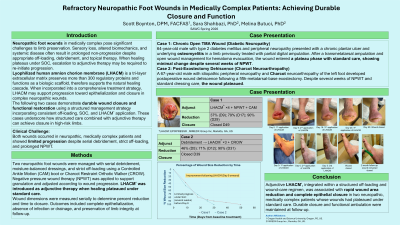
Introduction: Neuropathic foot wounds in medically complex patients can be difficult to progress under standard care because sensory loss, deformity, and systemic comorbidities impair the wound’s ability to advance toward closure. When improvement plateaus, adjunctive biologic therapies may help support further advancement toward closure. This case series describes outcomes following the use of Lyophilized Human Amnion Chorion Membrane (LHACM) in two high-risk neuropathic foot wounds.
Methods: Two neuropathic male patients with complex foot wounds and substantial medical and structural comorbidities, including diabetes, hypertension, hyperlipidemia, atrial fibrillation, depression, prior digital amputations, and Charcot neuroarthropathy, were retrospectively reviewed. Wound bed preparation included serial sharp debridement, with operative debridement performed in one case. Management incorporated moisture-balanced dressings, strict off-loading using either a Controlled Ankle Motion boot or a Charcot Restraint Orthotic Walker, and a course of Negative Pressure Wound Therapy adjusted according to wound progression. LHACM was introduced as adjunctive therapy when improvement slowed under standard care. Wound dimensions were tracked serially to calculate percent reduction and time to epithelial closure.
Results: Both wounds demonstrated minimal early progression under standard care. Following the introduction of LHACM, each wound showed accelerated reduction and complete epithelialization. In Case 1 (open transmetatarsal amputation wound), wound area decreased by 90% by Day 29 and fully closed by Day 49. In Case 2 (postoperative dehiscence in a Charcot foot), wound area decreased by 90% by Day 31 and closed by Day 39. Durable epithelial integrity and functional ambulation were maintained at follow-up, with no recurrence or drainage.
Discussion: Adjunctive LHACM, integrated into a structured regimen of off-loading and wound bed optimization, was associated with progressive wound reduction and complete closure in two neuropathic, comorbid patients whose wounds had shown limited improvement under standard care. These findings support the potential role of LHACM as part of an escalated treatment strategy for complex neuropathic foot wounds.

.jpg)