
.jpg)
Case Series/Study
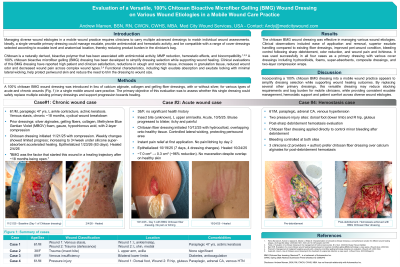
Managing diverse wound etiologies in a mobile wound practice requires clinicians to carry multiple advanced dressings to match individual wound assessments. Ideally, a single versatile primary dressing could manage exudate, provide antimicrobial and hemostatic activity, and be compatible with a range of cover dressings selected according to exudate level and anatomical location, thereby reducing product burden in the clinician's bag.
Chitosan is a natural bioactive material with antimicrobial, anti-inflammatory, hemostatic, and biocompatible properties.1,3 A 100% chitosan bioactive microfiber gelling (BMG) dressing has been developed to simplify dressing selection while supporting wound healing. Clinical evaluations of this BMG dressing have reported high patient and clinician satisfaction, reductions in slough and necrotic tissue, increases in granulation tissue, reduced wound odor and decreased wound pain across complex wound types.2_5 Functional characteristics, including high exudate absorption and exudate locking with minimal lateral wicking, help protect periwound skin and reduce the need to trim the dressing to wound size.1_3
Methods:
A 100% chitosan BMG wound dressing was introduced in lieu of calcium alginate, collagen and gelling fiber dressings, with or without silver, for various types of acute and chronic wounds in a single mobile wound care practice. The primary objective of this evaluation was to assess whether this single dressing could safely replace multiple existing primary dressings and support progression towards healing.
Results:
The chitosan BMG wound dressing was effective in managing various wound etiologies. Clinical observations included ease of application and removal, superior exudate handling compared to calcium alginates, improved peri-wound condition, bleeding control following sharp debridement, odor, and wound pain and itchiness. It was used successfully with various cover dressings including hydrocolloids, foams, super-absorbents, composites, and two layer compression wraps.
Discussion: Incorporating a 100% chitosan BMG dressing into a mobile wound practice appears to simplify dressing selection while supporting wound healing outcomes. By replacing several other primary dressings, this versatile dressing may reduce stock requirements and bag burden for mobile clinicians, while providing consistent exudate management, hemostatic support and patient comfort across diverse wound etiologies.