
.jpg)
Case Series/Study
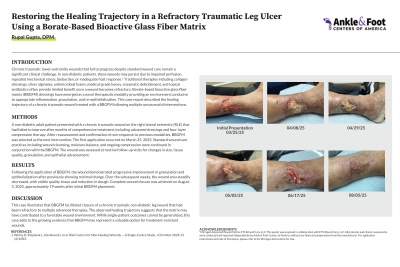
Following the application of BBGFM, the wound demonstrated progressive improvement in granulation and epithelialization after previously showing minimal change. Over the subsequent weeks, the wound area steadily decreased, with visible quality tissue and reduction in slough. Complete wound closure was achieved on August 5, 2025, approximately 19 weeks after initial BBGFM placement.
Discussion:
This case illustrates that BBGFM facilitated closure of a chronic traumatic non-diabetic leg wound that had been refractory to multiple advanced therapies. The observed healing trajectory suggests that the matrix may have contributed to a favorable wound environment. While single-patient outcomes cannot be generalized, this case adds to the growing evidence that BBGFM may represent a valuable option for treatment-resistant wounds.