(CS-151) Regenerative Healing of a Chronic Diabetic Foot Ulcer Using Borate-Based Bioactive Glass Fiber Matrix with Offloading via CROW Boot: A Case Study
Friday, April 10, 2026
Magen Bissell, AGNP-C, WCC, OMS – Wound Care Nurse Practitioner, Newton-Wellesley Hospital/Mass General Brigham Wound Care & Ostomy Center
Introduction: Chronic diabetic foot ulcers (DFUs) are a leading cause of lower extremity amputation, contributing to >80% of diabetes related limb loss globally. 1 Approximately 40% of DFUs fail to heal despite appropriate offloading and use of advanced wound care modalities. These refractory wounds are characterized by dysregulated inflammation, cellular senescence, impaired angiogenesis, and disrupted extracellular matrix (ECM) remodeling.2–4 Bioactive glass fiber matrix like materials, have demonstrated regenerative potential via ionic dissolution products that modulate macrophage phenotype, enhance angiogenic signaling, and promote fibroblast-mediated ECM deposition.5–7 This case study examines the use of a resorbable borate-based bioactive glass fiber matrix (BBGFM) in conjunction with strict offloading using a CROW (Charcot Restraint Orthotic Walker) boot for a recalcitrant plantar DFU unresponsive to prior interventions.
Methods: A 65-year-old male with a Wagner Grade 1 plantar DFU presented with a 3-year history of a recalcitrant ulcer, characterized by repeated cycles of reopening and delayed healing. The wound had failed to respond to standard of care and multiple cellular and tissue-based products (CTPs). A new protocol was initiated using a BBGFM applied weekly for five consecutive treatments. The patient was fitted with a CROW (Charcot Restraint Orthotic Walker) boot to provide offloading throughout the study period. Wound healing progression was assessed using measurements of wound length, width, depth, percentage granulation, and epithelialization at each visit. The matrix’s biocompatibility, ease of application, and any adverse events were also recorded
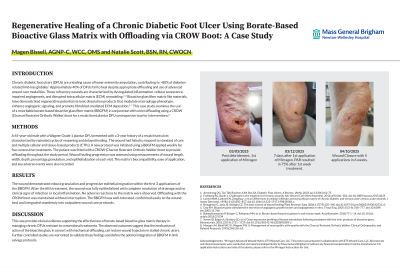
Results: The wound demonstrated robust granulation and progressive epithelial migration within the first 3 applications of the BBGFM. After the fifth treatment, the wound was fully epithelialized with complete resolution of drainage and no clinical signs of infection or local inflammation. No adverse reactions to the matrix were observed. Offloading with the CROW boot was maintained without interruption. The BBGFM was well-tolerated, conformed easily to the wound bed, and integrated seamlessly into outpatient wound care protocols
Discussion: This case provides clinical evidence supporting the effectiveness of borate-based bioactive glass matrix therapy in managing chronic DFUs resistant to conventional treatments. The observed outcomes suggest that the mechanism of action of the bioactive glass, in concert with mechanical offloading, can restore wound trajectory in stalled chronic ulcers. Further controlled studies are warranted to validate these findings and define the optimal integration of BBGFM in limb salvage protocols

.jpg)