
.jpg)
Case Series/Study
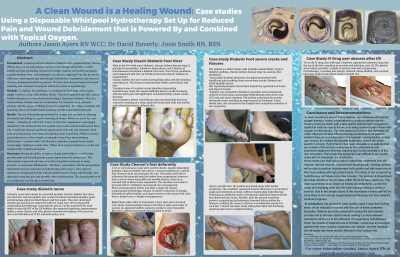
Cleansing and debridement of diabetic foot, peripheral artery disease (PAD), stasis ulcers and pressure injuries to clear slough and biofilm, is often painful and time consuming. Removal of slough, crusting and biofilm can greatly expedite healing times1. Hydrotherapy is an effective approach2 but also has issues with time consuming set ups, post therapy disinfection of equipment, and concerns of cross-contamination between patients. We have demonstrated improved wound cleansing and outcomes by using an improved version of hydrotherapy.
Methods:
To address this challenge, we combined hydrotherapy with oxygen supply to power a disposable bubbler device. This novel approach provides oxygen bubbles that pass over wound tissues providing a cleansing whirlpool effect in a warm solution. Patient soaks the wound about 10-15minutes in an antiseptic solution with the oxygen bubbling across the wound bed. Providing a soothing and hydrating effect will enable better cleansing with the foam debridement pad.
Results:
The use of hydrotherapy powered by oxygen was essential in softening biomaterial and aiding in a gentle cleansing of tissues. Photos of one of our case studies; a homeless pt with PAD, history of frost bite, amputations, and maggot infestation. On admission the foot wounds were coated with dried blood and feces. The wound beds showed significant improvement with only one treatment, thick scale crust and eschar were removed exposing clean wound beds. Photos showed a great reduction in yellow slough covering the wound base demonstrating effectiveness.
A patient with PAD showed a reduction in purple tissue around wound edges, lighting to a pink color. Others showed great reduction in eschar and slough visible in photos presented.
Discussion:
Having the ability to remove slough and biofilm in a method that provides pain relief would present a great improvement for patient care. This demonstrates improved outcomes over that of standard treatments of sharp, autolytic, or enzymatic debridement.
The three case studies with this presentation demonstrate positive outcomes of hydrotherapy with oxygen. They showed reduction in slough and biofilm with the added benefit of being staff friendly, easy disposable setup that prevents possible cross-contamination. This has potential to be an exciting new tool for use in wound care.