
.jpg)
Practice Innovations
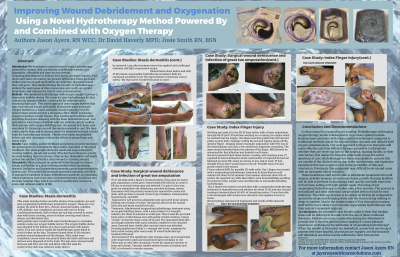
We developed a new process of using hydrotherapy powered by oxygen, that can cleanse and debride wounds in a disposable, affordable and time-saving method. Cleansing/debridement of diabetic foot ulcers, pressure injuries, PAD ulcers and stasis dermatitis can present difficulties. Risks included while removing slough and biofilm are infection, decreased blood flow, and pain.
This method brings the benefits of hydrotherapy1; without the past issues of time-consuming and costly set-up and breakdown and reduces the risk of cross contamination.
Methods:
We combined hydrotherapy with oxygen supply to power a disposable bubbler device. We created a new hydrotherapy kit that contains an oxygen bubbler, a mixing kit for solutions and a cleansing foam pad. This novel approach uses oxygen bubbles that pass over wound tissues with slight hydrostatic water pressure. Oxygen bubbles in a warm antiseptic solution passing over the wound tissue would provide a cleansing effect. While increasing oxygen to surface wound tissues. This soothes and hydrates while providing improved cleansing with the foam debridement pad.
Our procedures were done at bedside with our patients simply soaking their wounds with oxygen bubbling over the wound bed. Each soak was about 10-15minutes or until the solution started to cool. We then used a gentle foam pad to cleanse away the loosened material created from the hydrotherapy session. Photos were taken immediately before and after treatment to show the effects to wound base and tissue color.
Results: Case studies, patient feedback and photos are presented with this presentation to demonstrate the positive outcomes of this novel treatment. The photographs show the quick and easy removal of crusting, biofilm, slough and eschar. This has been shown to greatly increase healing times in an easy, time saving, disposable, and single patient use method. Afterall a clean wound is a healing wound.
Discussion:
Utilizing oxygen/air powered hydrotherapy to remove slough and biofilm in a pain-relieving method while increasing warmth, hydration and oxygenation presents a great improvement in patient care. This would demonstrate improved outcomes over that of standard treatments of sharp debridement, autolytic, or enzymatic. Other treatments could cost more in treatment times, heal times and increase hospital stays which can lead to significantly increased costs, and reduced quality of life.