(LR-005) Assessing the sustained antimicrobial activity within a nitric oxide-generating dressing using antibiotic-resistant wound pathogens in a repeated inoculation model
Friday, April 10, 2026
Emma Griffiths, PhD – Microbiology Manager, Convatec; Kate Meredith, PhD – Principal Scientist, Applied Research, Convatec; Daniel Metcalf, PhD – Director, Medical Science Liaison, Advanced Wound Care, Convatec
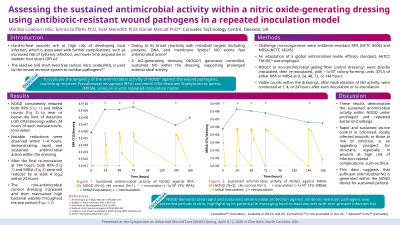
Introduction: Hard-to-heal wounds, such as diabetic foot ulcers, are at high risk of local infection. A multimodal nitric oxide-generating dressing (NOGD) has been designed to generate antimicrobial nitric oxide within the dressing. The aim of this study was to evaluate the sustained nature of the antimicrobial activity within NOGD following repeated inoculations of antibiotic-resistant pathogens into the same test dressings over 168 hours.
Methods: An in vitro direct inoculation model adapted from the AATCC 100 antimicrobial susceptibility standard test method was used. The same test dressings were directly inoculated, then re-inoculated, with approximately 1x10⁶ colony-forming units (CFU) of either multidrug-resistant Pseudomonas aeruginosa (RPA) or Methicillin-resistant Staphylococcus aureus (MRSA) at 0, 24, 48, 72 or 144 hours. Viable counts of dressing extracts, after neutralization of nitric oxide activity, were conducted at 1, 4 or 24 hours after each inoculation or re-inoculation. A non-antimicrobial dressing served as control throughout the 35±3°C, 168-hour test period.
Results: NOGD consistently reduced both RPA and MRSA counts to near or below the limit of detection (< 30 CFU/dressing) within 24 hours of each inoculation/re-inoculation, often within 1–4 hours, demonstrating rapid and sustained antimicrobial action within the dressing. After the final re-inoculation at 144 hours, both RPA and MRSA were still reduced by at least 4 log₁₀ within 24 hours. The non-antimicrobial dressing maintained bacterial viability throughout. These results confirm the sustained antimicrobial activity within NOGD under prolonged and repeated bacterial challenge.
Discussion: NOGD demonstrated rapid and sustained antimicrobial protection against antibiotic-resistant pathogens over extended periods, highlighting its potential in managing hard-to-heal wounds with ever-present infection risk.

.jpg)