
.jpg)
Case Series/Study
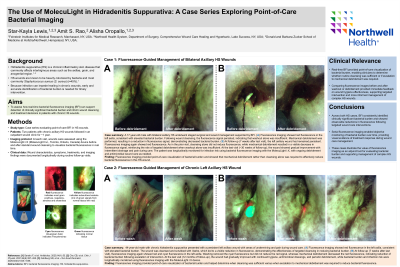
Hidradenitis suppurativa (HS) is a chronic inflammatory skin disease that commonly affects intertriginous areas such as the axillae, groin, and anogenital region. HS wounds are known to be heavily colonized by bacteria and most commonly Staphylococcus aureus (S. aureus) (≈45%). Because infection can impede healing in chronic wounds, early and accurate identification of bacterial burden is essential for timely intervention. The MolecuLight device is a point-of-care autofluorescence imaging tool that uses violet light to make bacteria visibly fluoresce, allowing clinicians to assess bacterial burden in real time.
Methods:
We evaluated the role of MolecuLight autofluorescence imaging in two patients with open axillary HS wounds to detect bacterial presence and guide clinical decisions. Data were collected over a 1-year period. At each visit, patients underwent MolecuLight imaging before and after standard wound washout, allowing us to visualize bacterial fluorescence patterns in real time.
Results:
Autofluorescence imaging proved to be a valuable indicator of bacterial load. We particularly focused on the red fluorescence which indicates bacteria that produces porphyrin such as S. aureus. The fluorescence correlated with both the presence and the intensity of infection. Notably, visits where patients reported minimal pain or symptoms tended to show reduced fluorescence. Real-time imaging also allowed us to immediately assess whether washout effectively decreased bacterial burden or if additional debridement or antimicrobial therapy was needed.
Discussion:
MolecuLight autofluorescence imaging may serve as a useful adjunct in the management of HS by providing immediate, visual confirmation of bacterial presence at the point of care. This real-time feedback has the potential to guide treatment decisions, optimize wound hygiene strategies, and support more personalized management for patients with HS.