
.jpg)
Health Economics
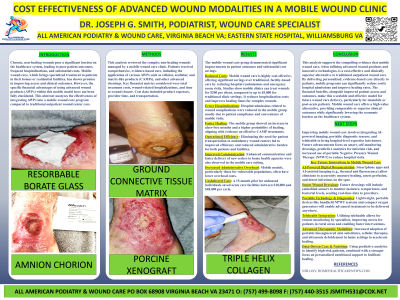
Chronic, non-healing wounds pose a significant burden on the healthcare system, leading to poor patient outcomes, frequent hospitalizations, and substantial costs. Mobile wound care, which brings specialized treatment to patients in their homes or residential facilities, has shown promise in improving access and clinical outcomes. However, the specific financial advantages of using advanced wound products (AWPs) within this mobile model have not been fully elucidated. This abstract analyzes the effectiveness of integrating AWPs into a mobile wound care program compared to traditional outpatient wound center care.
Methods:
: This analysis reviewed the complex non-healing wounds managed by a mobile wound care clinic. Patients received comprehensive, evidence-based care, including the application of various AWPs such as cellular, acellular, and matrix-like products (CAMPs), and other advanced dressings. Key financial metrics considered were total treatment costs, wound-related hospitalizations, and time to wound closure. Cost data included product expenses, provider time, and transportation.
Results:
Results: The mobile wound care group demonstrated significant improvements in patient outcomes and substantial cost savings.
Reduced Costs: Compared to the facility-driven care model consistent with findings from other pilot studies, the mobile wound clinic saw a 4-fold decrease in cost.
Fewer Hospitalizations: Hospital admissions related to wound complications were reduced in the mobile group mostly due to patient compliance and convenience of mobile visits.
Faster Healing: The mobile group showed an increase in ulcer-free months and a higher probability of healing, aligning with evidence on effective CAMP treatments.
Operational Efficiency: Eliminating the need for patient transportation to ambulatory wound centers led to improved efficiency and reduced administrative burden for both patients and facilities.
Improved Communication: Enhanced communication and faster delivery of new orders to home health agencies were also observed in the mobile care setting.
Discussion:
This analysis supports the compelling evidence that mobile wound care, when utilizing advanced wound products and innovative technologies, is a cost-effective and clinically superior alternative to traditional outpatient wound care. By delivering personalized, evidence-based care directly to patients, mobile programs can significantly reduce costly hospital admissions and improve healing rates. The financial benefits, alongside improved patient access and outcomes, make this a scalable and effective model for future wound care delivery, particularly for immobile or post-acute patients.