
.jpg)
Case Series/Study
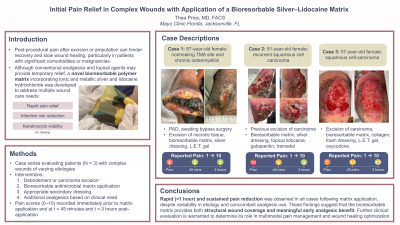
Post-procedural pain after excision or amputation can hinder recovery and slow wound healing, particularly in patients with significant comorbidities or malignancies. Although conventional analgesics and topical agents may provide temporary relief, a novel bioresorbable polymer matrix incorporating ionic and metallic silver and lidocaine hydrochloride was developed to address multiple wound care needs: rapid pain relief, infection risk reduction, and keratinocyte viability for healing.
Methods: This case series evaluated three patients with complex wounds of varying etiologies. The bioresorbable antimicrobial matrix was applied directly to excised wound beds following debridement or carcinoma excision. Each wound was subsequently covered with an appropriate secondary dressing (silver dressing for Patients 1 and 2; collagen and foam dressing for Patient 3). Additional analgesics were provided based on clinical need, including topical L.E.T. gel, topical lidocaine, gabapentin, tramadol, or oxycodone. Pain scores (0–10) were recorded immediately prior to matrix application and at 45 minutes and three hours post-application.
Results: Patient 1: An 87-year-old female with a nonhealing transmetatarsal amputation site and chronic osteomyelitis reported baseline pain of 8/10. Pain decreased to 2/10 at both 45 minutes and three hours after matrix application.
Patient 2: A 91-year-old female with recurrent squamous cell carcinoma of the hindfoot and heel reported baseline pain of 10/10. Pain decreased to 6/10 at 45 minutes and 3/10 at three hours post-application.
Patient 3: A 57-year-old female with squamous cell carcinoma of the scalp reported baseline pain of 7/10. Pain decreased to 5.5/10 at 45 minutes and 4.5/10 at three hours following matrix application. Rapid (< 1 hour) and sustained pain reduction was observed in all three cases following matrix application, despite variability in wound etiology and concomitant analgesic use. These findings suggest that the bioresorbable matrix likely provides both structural wound coverage and meaningful early analgesic benefit. Further clinical evaluation is warranted to determine its role in multimodal pain management and wound healing optimization.
Discussion: