
.jpg)
Case Series/Study
Complex surgical wounds remain a significant source of morbidity, frequently leading to high rates of postoperative infection, wound dehiscence, prolonged hospitalization, and repeat surgical intervention.1,2 These challenges are markedly amplified in patients with contaminated wounds or those requiring deep surgical debridement, where compromised vascularity, fluid accumulation, and bacterial burden undermine successful closure attempts.3,4 The case highlighted illustrates the clinical burden of such wounds and the potential role of a borate-based bioactive glass fiber matrix (BBGFM) in optimizing wound bed preparation prior to definitive surgical closure.
Methods:
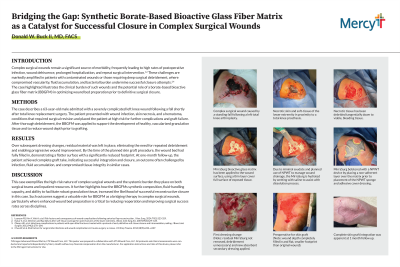
The case describes a 63-year-old male admitted with a severely complicated left knee wound following a fall shortly after total knee replacement surgery. The patient presented with wound infection, skin necrosis, and a hematoma, conditions that required surgical revision and placed the patient at high risk for further complications and graft failure. After thorough debridement, the BBGFM was applied to support the development of healthy, vascularized granulation tissue and to reduce wound depth prior to grafting.
Results:
Over subsequent dressing changes, residual material was left in place, eliminating the need for repeated debridement and enabling progressive wound improvement. By the time of the planned skin graft procedure, the wound bed had fully filled in, demonstrating a flatter surface with a significantly reduced footprint. At one-month follow-up, the patient achieved complete graft take, indicating successful integration and closure, an outcome often challenged by infection, fluid accumulation, and compromised tissue integrity in similar cases.
Discussion:
This case exemplifies the high-risk nature of complex surgical wounds and the systemic burden they place on both surgical teams and inpatient resources. It further highlights how the BBGFMs synthetic composition, fluid-handling capacity, and ability to facilitate robust granulation tissue, increased the likelihood of successful reconstructive closure in this case. Such outcomes suggest a valuable role for BBGFM as a bridging therapy in complex surgical wounds, particularly where enhanced wound bed preparation is critical to reducing reoperation and improving surgical success rates across disciplines.