(CS-099) Successful Topical Management of a Lower Left Extremity Carbuncle Using Hypochlorous Acid: A Case Report on Chronic Wound Care and its Applications in Rural Health
Friday, April 10, 2026
Kerry Thibodeaux, MD FACS CWSP FACCWS FAPWCA
Introduction: A 34-year-old male with a history of hypertension and tobacco use presented to the wound clinic with a sizable carbuncle on the medial aspect of his distal lower left extremity that had been complicated by microabcesses, despite standard management with wound debridement and topical antibiotics. The patient's increased bacterial burden was further complicated by his chronic cigarette use, which has long been associated with delayed wound healing due to the vasoconstrictive effects of nicotine in cigarettes, creating a hypoxic environment in the tissue, which can significantly impair the cellular functions necessary for proper wound healing.
Methods: Hypochlorous acid is naturally produced by immune cells in the human body and has been known to have broad-spectrum antimicrobial activity. A topical hypochlorous acid spray therapy was eventually initiated to sterilize the wound and facilitate adequate wound healing. The formulation was given to the patient to take home with instructions to apply the product to the wound twice daily. The patient returned to the clinic for routine follow-up visits to evaluate the effectiveness of the hypochlorous acid treatment regimen.
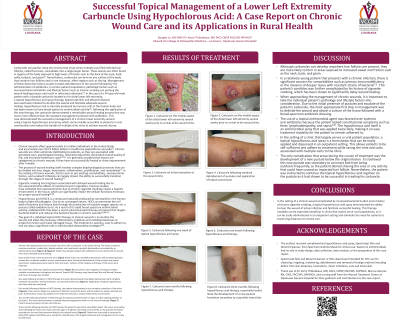
Results: Following the application of the hypochlorous acid therapy, the carbuncle demonstrated a remarkable wound healing process that was much more effective than the standard management protocolof wound debridement followed by topical antibiotics. A month following initiation of the hypochlorous acid therapy, the patient demonstrated a near-complete resolution of the lesion. There was no longer any evidence of an infection around the lesion, and the patient no longer had any pain. At two months, the patient presented with no signs of active ongoing infection of his lesion.The wound demonstrateda markedly improved appearance with no new areas of drainage. The patient presented three months after initiation of hypochlorous acid therapy with his wound essentially healed. At this point, the tissue surroundingand underlying the lesion was intact, with only signs of erythema remaining
Discussion: In the setting of a chronic wound complicated by increased bacterial burden and a history of chronic cigarette smoking, a topical hypochlorous acid spray demonstrated the ability to clearthe wound of active infectionand facilitatesuccessful healing.This therapy modality can be especially beneficial in clinics that mainly serve rural populations, as it can be easily administered in an outpatient setting and eliminates the need for patients to travel long distances to receive care

.jpg)