
.jpg)
Case Series/Study
Zuska’s disease, also known as squamous metaplasia of the lactiferous ducts, is a rare condition characterized by recurrent central or periareolar breast abscesses, lactiferous fistula formation, and chronic draining wounds.1,2 The condition is most frequently observed in middle-aged females with a history of tobacco use.1 Multiple treatment methods, such as antibiotic therapy, drainage of the abscess, and excision, have been utilized, but fistula formation and lesion recurrence remain common complications.3
Methods:
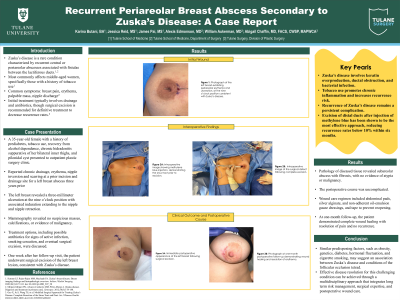
A 35-year-old female with a history of hidradenitis suppurativa, pilonidal cyst with abscess, chronic subareolar nonpuerperal abscess, prior alcohol use disorder, prior tobacco smoking with current e-cigarette use, presented with chronic non-healing subareolar wound of the left breast, characterized by persistent drainage and erythema despite incision and drainage in 2020. Clinical examination revealed a 3-mm ulceration at the 9:00 position with associated induration extending to the left nipple, with nipple retraction. Mammography detected no suspicious masses or calcifications and no evidence of malignancy. The patient underwent complete excision of the sinus tract and involved lactiferous ducts using methylene blue guidance, followed by irrigation of the defect and reconstruction with an adjacent parenchymal flap and concurrent nipple reconstruction.
Results:
Postoperative wound healing progressed without major complications. The wound was managed with regular wound care follow ups with use of abdominal pads, silver alginate, and non-adherent oil emulsion gauze dressings. At one-month follow-up, the patient reported marked improvement in pain and demonstrated no evidence of recurrence. She has continued with conservative wound management and remains disease free.
Discussion:
Zuska’s disease is rare, accounting for only 1-2% of breast pathologies, leading to increased misdiagnosis and morbidity rates. While surgical excision is the definitive form of management, recurrence is further complicated by hormonal changes, comorbidities, and tobacco use. This case demonstrates that meticulous wound care following excision and flap reconstruction are optimal for healing and preventing complications. Further research is needed to investigate personalized treatment plans in patients with complex comorbidities, autoimmune conditions, or ongoing tobacco use.