
.jpg)
Case Series/Study
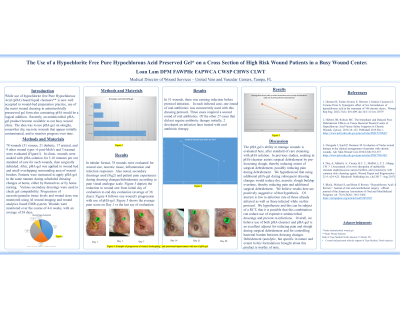
78 wounds (31 venous, 21 diabetic, 17 arterial, and 9 other wound types -6 post-Moh’s and 3 trauma) were evaluated. In clinic, wounds were soaked with pHA-solution for 5-10 minutes, then surgically debrided. After, pHA-gel was applied to wound bed and small overlapping surrounding area of wound borders. Patients were instructed to apply pHA-gel in the same manner during scheduled dressing changes at home, either by themselves or by home nursing. Various secondary dressings were used to check gel compatibility. Progression of necrotic/granular tissue levels and wound sizes was monitored using AI wound imaging and wound analytics based EMR-system.
Results: In tabular format, 78 wounds were evaluated for wound size, necrotic tissue, inflammation and infection responses. Also noted, secondary dressings used and patient pain experiences during dressing changes/debridement according to pain visual analogue scale. In 51 wounds, there was existing infection before protocol initiation. In each infected case, one round of oral antibiotics was concurrently used with this dressing protocol. 3 cases required a second round of oral antibiotics. Of the other 27 cases that did not require antibiotic therapy initially, 2 developed an infection later treated with oral antibiotic therapy.
Discussion: Synergy of pHA-based solution and pHA-based gel, as well as pHA-gel by itself, is evaluated here. In previous studies, soaking in pHA-cleanser assists surgical debridement by pre-loosening slough, thereby reducing extent of surgical debridement, possibly reducing pain during debridement. We hypothesized that using additional pHA-gel during subsequent dressing changes would reduce dry, necrotic slough buildup overtime, thereby reducing pain and additional surgical debridement. We believe results here are positively suggestive of that hypothesis. Of interest is low re-infection rate of those already infected as well as those infected while on this protocol. We posit if it is possible that this combination can reduce use of expensive antimicrobial dressings and prevent re-infections. Overall, we believe use of both pHA-cleanser and pHA-gel is an excellent adjunct for reducing pain and slough during surgical debridement and for controlling bacterial burden between dressing changes.