(CS-070) Spontaneous Closure of a Complex Postoperative Enterocutaneous Fistula Assisted by ON101 Botanical Topical Cream: a cast report
Friday, April 10, 2026
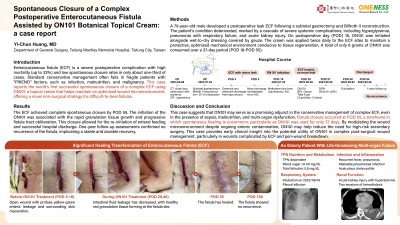
Introduction: Enterocutaneous fistula (ECF) is a severe and challenging postoperative complication, representing an abnormal connection between the gastrointestinal tract and the skin. These fistulas are associated with significant morbidity and a mortality rate ranging from 5% to 33%. The potential for spontaneous healing is limited, with successful conservative management achieved in only approximately one-third of all cases. This clinical reality underscores the persistent need for effective adjunctive therapies that can promote fistula closure and obviate the need for high-risk surgical intervention. This report presents the first known case of a complex, postoperative ECF in a critically ill patient that was successfully managed to spontaneous closure with the assistance of ON101, a topical cream that maintains an optimized wound microenvironment.
Methods: A 79-year-old male initially underwent surgery for a close loop bowel obstruction. An incidental finding of gastric adenocarcinoma during postoperative ileus necessitated a second operation: a subtotal gastrectomy with Billroth II reconstruction and feeding jejunostomy. His postoperative course was catastrophically complicated by the development of a minor leak ECF on postoperative day 5. The patient’s clinical condition rapidly deteriorated, marked by a cascade of severe systemic complications, including TPN-dependency with hyperglycemia, pneumonia with respiratory failure, pleural effusion, acute kidney injury requiring hemodialysis, jaundice, and infection with drug-resistant bacteria. On postoperative day 18, ON101 was initiated, 6 gm total, applied directly to the fistula site twice daily. The ECF achieved complete and spontaneous closure on postoperative day 55, allowing for the successful re-initiation of enteral feeding and eventual discharge.
Results: Spontaneous fistula closure in patients with unfavorable factors (sepsis, malnutrition, and multi-organ dysfunction) is prolonged with standard conservative measures alone. This compelling temporal relationship between the initiation of cream and subsequent wound closure strongly indicates that the topical therapy facilitated this outcome. Furthermore, this closure occurred at postoperative day 55, and according to established data, spontaneous ECF healing after 4 weeks but within 8 weeks was rare. This reinforces the conclusion that the intervention had a potential therapeutic effect.
Discussion: To our knowledge, this is the first report documenting the successful use of botanical topical cream to assist in the non-operative closure of a complex ECF. This case demonstrates that ON101 presents as a promising adjunct in the conservative management of ECF without adverse effect.

.jpg)