Introduction: Chronic venous leg ulcers (VLUs) are often complicated by biofilm-driven infection, increased protease activity and subsequentdelayed healing. Effective management requires strategies that disrupt biofilms, rebalance the wound environment, and maintain hygiene. This case study evaluates the impact of a thermo-reversible antimicrobial wound gel (TRG) designed for advanced wound hygiene when used in a patient with complex comorbidities and multiple hard-to-heal wounds
Methods: A 62-year-old female with a 12-year history of circumferential VLUswitha re-occurrence 10 months prior to study initiation. Comorbidities include diabetes, obesity, and chronic phlebolymphedema. The patient was treated over 27 weeks incorporating TRG into wound hygiene protocols including compression, elevation, and debridement. Wound measurements were recorded across four leg regions (anterior, lateral, medial, posterior) at multiple time points. Outcomes included percent wound area reduction, qualitative changes in tissue composition, and pain scores.
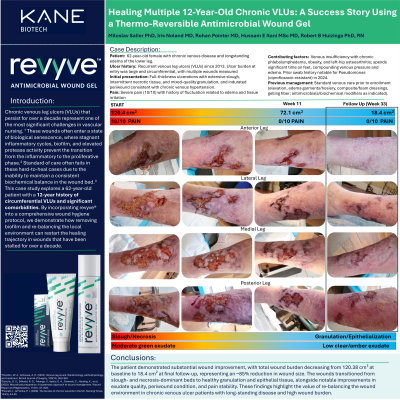
Results: Baseline cumulative wound area was 120.2 cm² and swabs confirm pseudomonas aeruginosa infection. By Week 27, total wound size decreased to 18.4 cm², representing an 85% overall reduction in wound sizes. Individual wounds demonstrated marked improvement: medial leg reduced from 45.3 cm² to 4.9 cm², lateral leg from 30.0 cm² to 3.8 cm², and posterior leg from 29.6 cm² to 9.7 cm². Tissue transitioned from slough and necrosis to granulation and epithelialization. Pain scores declined from 10/10 to 0–3/10 during later visits.
Discussion: Biofilm-related chronic infection leads to non-healing wounds. Keeping wounds free of biofilm, optimally hydrated, at the correct pH, physiologically balanced, and clean is essential for converting non-healing wounds to healing wounds.Previous data has shown that TRG keeps the wound moist at the right pH for autolytic debridement, deactivates elevated protease levels, breaks up biofilm structures, and provides a protective barrier against re-colonization of the wound. In this case study, a high-risk patient with multiple comorbidities and 10-year-old recurring VLUs, starting using the TRG. It was observed that wound healing restarted and accelerated with progressively improved tissue composition with reduction in pain.This case suggests that advanced wound hygiene strategies may help reduce care burden in complex wounds

.jpg)