(CS-146) Management of a Chronic Tunneling Wound in a Quadriplegic Patient Using the Novel Thermo-Reversible Antimicrobial Wound Gel
Friday, April 10, 2026
Robert Huiziinga, RN PhD; Hussam Itani, MSc. MD; John Viel, PhD
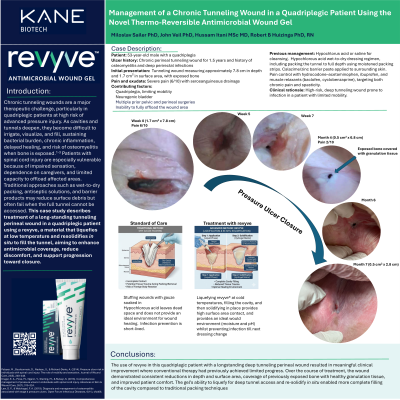
Introduction: Chronic tunneling wounds present significant challenges in healing, especially in patients with limited mobility. Another complication for treatment is access to into deep cavities for topical agents and dressings. Limited accessibility and mobility usually lead to elevated bacterial burden and persistent inflammation resulting in prolonged wound duration and increased risk of surgical intervention.This case describes the use of a novel Thermo-Reversible Antimicrobial Wound Gel (TRG)in a quadriplegic patient with a long-standing tunneling wound reaching bone.
Methods: A 52-year-old male with quadriplegia presented with a tunneling wound of 1.5-year duration, measuring approximately 7.8 cm in depth and 1.7 cm² in surface area, with exposed bone. Prior management included Vashe wound solution, zinc cream, and gauze packing, with minimal improvement. Pain was reported at 6/10. TRG was introduced as part of the wound care regimen, liquefied at 10°C, and applied directly to the wound bed and into the tunnel, followed by appropriate secondary dressing. Progress was monitored weekly for six weeks, assessing wound dimensions, pain score, and overall quality of life
Results: After six weeks of TRG treatment, surface area was reduced from 1.7 cm² to 0.5 cm² and wound depth decreased from 7.8 cm to 6.8 cm. Bone exposure was resolved. Pain score improved from 6/10 to 2/10. The patient reported significant improvement in comfort and mobility, and surgical intervention was avoided due to positive healing progression.
Discussion: This case demonstrates the potential of TRG to accelerate healing in complex tunneling wounds, reduce pain, and improve quality of life in patients with severe mobility limitations.The ability to utilize the thermos-reversible nature of TRG by liquifying at cooler temperatures, fill the deep cavity wound, and re-solidify, is a unique feature of this gel demonstrating its versatility. The observed reduction in wound depth and surface area, along with pain improvement, suggests that the use of TRG in this case converted a non-healing wound into a healing wound, and may offer an effective alternative to prolonged conventional therapy and expensive surgical procedures.

.jpg)