(CS-111) Thermo-Reversible Wound Gel Promotes Healing by Normalizing Wound Bed pH in Chronic Wounds
Friday, April 10, 2026
Robert Huiziinga, RN PhD; Hussam Itani, MSc. MD; Miloslav Sailer, PhD – Kane Biotech
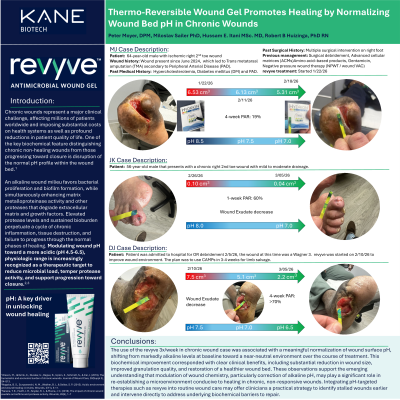
Introduction: Wound bed pH is a critical biomarker of healing status. Chronic wounds often exhibit alkaline environments (pH > 7), which favor bacterial proliferation and protease activity, delaying healing. The novel Thermo-reversible Wound Gel (TRG) is buffered to keep wound pH optimal for wound healing. We hypothesized that TRG application would lower wound pH and that this reduction would correlate with improved clinical wound progression.
Methods: A prospective observational study was conducted in patients with chronic wounds receiving TRG as part of standard care. Wound pH was assessed usinga pH diagnostic device, which measures pH from exudate absorbed on discarded dressings without direct wound contact. Measurements were taken at baseline for non-healing wounds, and at follow-up intervals after TRG application.Correlation analysis evaluated the relationship between pH category (acidic, neutral, alkaline) and clinical wound progression.
Results: Data collection is ongoing, current data indicate that wounds treated with TRG demonstrated a significant decrease in pH toward near-neutral values compared to baseline. This pH reduction was associated with wound progression.
Discussion: These findings support TRGs role in modulating wound surface chemistry to promote healing. By lowering wound pH from alkaline toward neutral or mildly acidic levels, TRG may help suppress bacterial proliferation and protease activity, creating a more favorable environment for tissue repair. Incorporating pH monitoring into routinewound care could enable clinicians to identify non-healing wounds earlier and incorporate a product like TRG to improve patient outcomes.

.jpg)