(PI-038) Zinc Paste Wrap Used as the Base Layer in a Four Layer Compression Dressing Reduces Skin Irritation and Maintains Dressing Placement
Friday, April 10, 2026
Lauren Turner, NP; Antwana Wright, MD
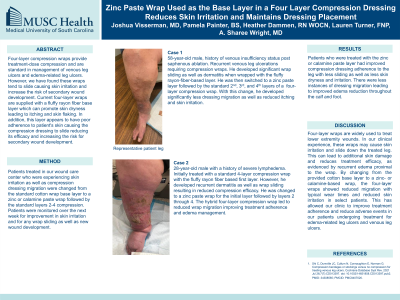
Introduction: Four-layer compression wraps provide treatment-dose compression and are standard in management of venous leg ulcers and edema-related leg ulcers. However, we have found these wraps have a tendency to slide causing skin irritation and increase the risk of secondary wound development. Current four layer wraps are supplied with a cotton base layer which can promote skin dryness leading to itching and skin flaking. In addition, this layer appears to have poor adherence to patient's skin causing the compression dressing to slide reducing its efficacy and increasing the risk for secondary wound development.
Methods: Patients treated in our wound care center who were experiencing skin irritation as well as compression dressing migration were changed from the standard cotton wrap base layer to a zinc or calamine paste wrap followed by the standard layers 2-4 compression. Patients were monitored over the next week for improvement in skin irritation and for any wrap sliding as well as new wound development.
Results: Patients who were treated with the zinc or calamine paste layer had improved compression dressing adherence to the leg with less sliding as well as less skin dryness and irritation. There were less instances of dressing migration leading to improved edema reduction throughout the calf and foot.
Discussion: Four-layer wraps are widely used to treat lower extremity wounds. In our clinical experience, these wraps may cause skin irritation and slide down the treated leg. This can lead to additional skin damage and reduces treatment efficacy, as evidenced by recurrent edema proximal to the wrap. By changing from the provided cotton base layer to a zinc- or calamine-based wrap, the four-layer wraps showed reduced migration with typical wear times and reduced skin irritation in select patients. This has allowed our clinic to improve treatment adherence and reduce adverse events in our patients undergoing treatment for edema-related leg ulcers and venous leg ulcers.

.jpg)