
.jpg)
Case Series/Study
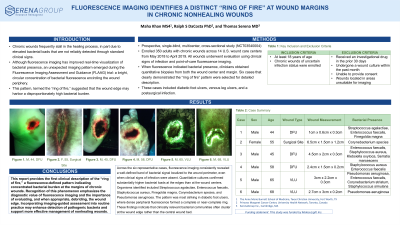
Chronic wounds frequently stall in the healing process, in part due to elevated bacterial loads that are not reliably detected through standard clinical signs. Although fluorescence imaging has improved real-time visualization of bacterial presence, an unexpected imaging pattern emerged during the Fluorescence Imaging Assessment and Guidance (FLAAG) trial: a bright, circular concentration of bacterial fluorescence encircling the wound periphery. This pattern, termed the “ring of fire,” suggested that the wound edge may harbor a disproportionately high bacterial burden. The present report describes this phenomenon and highlights its relevance to chronic wound assessment and management.
Methods:
The FLAAG study enrolled 350 adults with chronic wounds across 14 U.S. wound care centers. All wounds underwent evaluation using clinical signs of infection and point-of-care fluorescence imaging, which detects porphyrin- and pyoverdine-associated fluorescence produced by common bacteria. When fluorescence indicated bacterial presence, clinicians obtained quantitative biopsies from both the wound center and margin. Six cases that clearly demonstrated the “ring of fire” pattern were selected for detailed description. These cases included diabetic foot ulcers, venous leg ulcers, and a postsurgical infection.
Results:
Across the six representative cases, fluorescence imaging consistently revealed a well-defined band of bacterial signal localized to the wound perimeter, even when clinical signs of infection were absent. Quantitative cultures confirmed substantially higher bacterial loads at the edges than at the wound centers. Organisms identified included Streptococcus agalactiae, Enterococcus faecalis, Staphylococcus aureus, Finegoldia magna, Corynebacterium species, and Pseudomonas aeruginosa. The pattern was most striking in diabetic foot ulcers, where dense peripheral fluorescence formed a complete or near-complete ring. These findings indicate that clinically relevant bacterial communities often cluster at the wound edge rather than the central wound bed.
Discussion:
This report provides the first clinical description of the “ring of fire,” a fluorescence-defined pattern indicating concentrated bacterial burden at the margins of chronic wounds. Recognition of this phenomenon emphasizes the diagnostic value of fluorescence imaging and the importance of evaluating, and when appropriate, debriding, the wound edge. Incorporating imaging-guided assessment into routine practice may enhance detection of pathogenic bacteria and support more effective management of nonhealing wounds.