(CR-026) A Prospective Study of a Single-Use Negative Pressure Wound Therapy System in a High-risk Revision Total Hip or Knee Arthroplasty Cohort
Friday, April 10, 2026
Jennifer O'Connell, BA – Molnlycke Health Care; Cheryl Rothermel, RN – Molnlycke Health Care; Liis Teene, MSc. – Molnlycke Health Care; John Timmons, RN, DipNS, Master of Nursing, PG Dip PGTLHE – Molnlycke Health Care
Introduction: Total hip arthroplasty (THA) and total knee arthroplasty (TKA) are common surgical procedures. While rates of surgical site complications (SSCs) are relatively low in primary procedures, approximately one in 20 TKAs will require revision within 10 years, with rates of complications up to 15-fold higher with revision. Closed incision negative pressure wound therapy (ciNPWT) is increasingly being used to prevent SSCs in patients undergoing revision arthroplasty. A study was undertaken to evaluate the performance of a canister-based, single-use, NPWT system following revision THA or TKA.
Methods: The investigation was undertaken at 7 high-volume orthopedic centers in the USA.The primary endpoint was the proportion of patients with at least one SSC within 90 days of post-revision surgery. Secondary endpoints included the incidence of surgical site infection (superficial, deep, or organ space) dehiscence, hematoma, and seroma formation at 30 and 90 days, and drainage within 14 days.
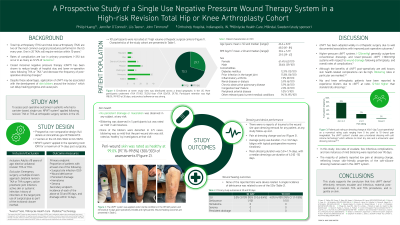
Results: A total of 105 patients were recruited. At 30 days post-operatively, 3 patients had experienced an SSC, none of which were deemed to be device-related. Importantly, skin was deemed ‘healthy’ by investigators at 99.0% of assessments, with no maceration, hematomas or seromas reported. Mild blistering was reported in 5 patients, but peri-wound skin was still deemed ‘healthy’ by investigators in two of those cases.
Discussion: In this report of 30-day study findings, the canister-based NPWT system performed well after revision THA and TKA. Low SSC incidence and highly favorable outcomes relating to skin condition were reported.Systems that can reduce the risk of SSCs occurring in high-risk patients while minimizing skin blistering around the incision site are desirable to health care providers, payers and patients.

.jpg)