(CS-123) When you hear hoofbeats, think zebras, not horses: A rare case of diffuse dermal angiomatosis
Friday, April 10, 2026
Boris Joutovsky, MD; Amanda Beneat, MD; Scott Gorenstein, MD
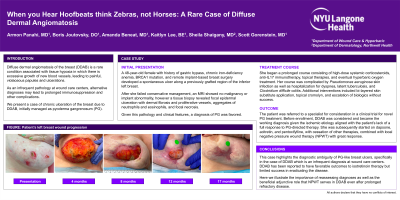
Introduction: Diffuse dermal angiomatosis of the breast (DDAB) is a rare condition associated with tissue hypoxia in which there is excessive growth of new blood vessels, leading to painful, violaceous papules and ulcerations. As aninfrequent pathology at wound care centers,alternative diagnoses may lead to prolonged immunosuppression and other complications.We present a case of chronic ulceration of the breast due to DDAB, initially managed aspyoderma gangrenosum (PG).
Methods: A 48-year-old female with history of gastric bypass, chronic iron-deficiency anemia, BRCA1 mutation, and remote implant-based breast surgery developed a spontaneous ulcer along a previously grafted region of the inferior left breast. An MRI after she failed conservative managementshowed no malignancy or implant abnormality, however a tissue biopsy revealed focal epidermal ulceration with dermal fibrosis and proliferative vessels, aggregates of neutrophils and eosinophils, and focal necrosis.Given this pathology andclinical features, a diagnosis of PG was favored. She began a prolonged course consisting of high-dose systemic corticosteroids, anti-IL17 immunotherapy#, topical therapies, and eventual hyperbaric oxygen treatment. Her course was complicated by Pseudomonas aeruginosa skin infection as well ashospitalization for dyspnea, latent tuberculosis, and Clostridium difficile colitis.Additional interventions includedbi-layered skin substitute* application, topical cromolyn, and escalation of biologicswithout success.
Results: The patientwasreferredto a specialist for consideration in a clinical trial for novel PG treatment.Before enrollment, DDAB was considered and became the working diagnosis given the ischemic etiology aligned with the patient’s lack of a full response to PG-directed therapy. She was subsequentlystarted on dapsone, acitretin, and pentoxifylline, with cessation of other therapies, combined with local negative pressure wound therapy (NPWT)withgreat response.
Discussion: This case highlights the diagnostic ambiguity of PG-like breast ulcers, specifically in the case of DDAB which is an infrequent diagnosis at wound care centers. DDAB has been reported to have favorable outcomes to isotretinoin therapy but limited success in eradicating the disease. Here we illustrate the importance of reassessing diagnoses as well as the beneficial adjunctive role that NPWT serves in DDAB even after prolonged refractory disease.

.jpg)