(PI-034) Climate Change & Wounds: A Call for Action from the AAWC Health Equity Task Force
Friday, April 10, 2026
maria goddard, MD
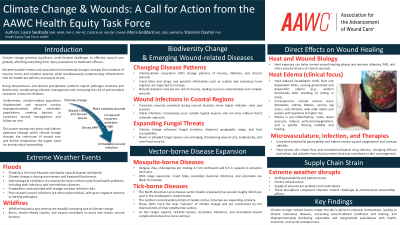
Introduction: This work, compiled by the Association for the Advancement of Wound Care's Health Equity Task Force, outlines significant, multi-faceted challenges that climate change presents to effective wound care globally & aims to review key direct and indirect pathways trough which climate change disrupts the continuum of wound care.
Methods: The task force identified several drivers of impact between climate change and wound care including: extreme weather events, infrastructure compromise, biodiversity change and disease emergence, direct wound microclimate impact, infection and antimicrobial stewardship, heat.
Results: The increased frequency and severity of extreme weather events increase the incidence of trauma, burns, and complex wounds while simultaneously compromising infrastructure vital for healthcare delivery and supply chains. Both tissue tolerance and the wound microclimate are adversely affected by heat and moisture imbalance. This risk is compounded by inconsistent staffing or products for treatments such as repositioning or wound hygiene. Climate-related resource scarcity and population displacement disproportionately affect vulnerable populations, creating barriers to consistent wound management and follow-up care. Psychological trauma from climate events represents a lifetime epigenetic nidus of disparate wound prevalence & healing.
Rising temperatures and altered precipitation patterns and their associated fluctuations in pathogen virulence and distribution complicate infection management, especially in the setting of antimicrobial resistance. Deadly necrotizing skin infections have increased due to unstable warming waters, and are now also seen outside of typical exposures.
Discussion: Climate change presents profound challenges to wound care, escalating wound burden while simultaneously degrading the conditions for successful treatment. There is an urgent need for strategic action and antimicrobial stewardship to mitigate these growing threats particularly for the most vulnerable populations.

.jpg)