
.jpg)
Practice Innovations
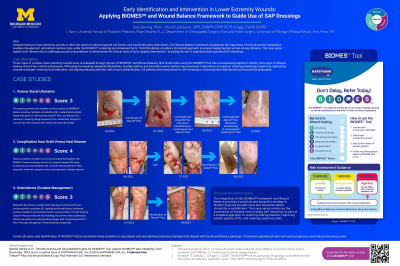
To demonstrate how early identification of healing barriers using the BIOMES℠ screening tool (developed by Dr. Brookshier), combined with the principles of the Wound Balance framework, can support timely intervention and optimize dressing strategies—specifically through the use of superabsorbent polymer (SAP) dressings in complex lower extremity wounds.
Methods:
Three patients with highly exudative lower extremity wounds stemming from venous stasis, graft-versus-host disease, and scleroderma were retrospectively evaluated. All presented with clinical features consistent with moderate to high BIOMES℠ scores, including infection, metabolic comorbidities, edema, and social limitations. Upon recognition of these risk factors, care plans were adapted to incorporate SAP dressings (Zetuvit® Plus and Zetuvit® Plus Silicone Border), aimed at addressing exudate management, supporting wound bed preparation, and aligning with the patient's broader healing trajectory.
Results: The BIOMES℠ tool and Wound Balance framework offer a complementary approach to proactively identify wounds at risk for delayed healing and initiate meaningful early interventions. Across the three cases, SAP dressings reduced dressing change frequency, improved wound conditions, and supported timely progression toward closure.
Discussion:
These findings underscore the importance of structured screening and physiologic rebalancing as essential components of wound care, shifting the focus from managing chronic wounds to healing them.