
.jpg)
Case Series/Study
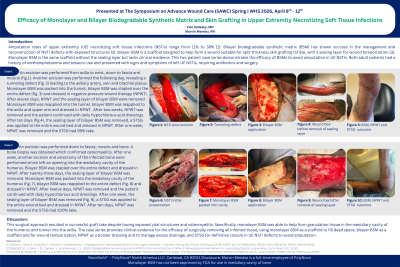
Amputation rates of upper extremity (UE) necrotizing soft tissue infections (NSTIs) range from 11% to 38% [1]. Bilayer biodegradable synthetic matrix (BSM) has shown success in the reconstruction of NSTI defects [2]. Bilayer BSM is a scaffold designed to help form a wound suitable for split thickness skin grafting (STSG), with a sealing layer for wound temporization [3]. Monolayer BSM is the same scaffold without the sealing layer but lacks clinical evidence. This two patient case series demonstrates the efficacy of BSMs to avoid amputation in UE NSTIs.
Methods:
Both adult patients had a history of methamphetamine and tobacco use and presented with signs and symptoms of left UE NSTIs, requiring antibiotics and surgery.
Case 1: Excisions were performed from axilla to wrist, down to fascia and muscle, revealing a tunnel into the axilla leading to the axillary artery, vein and brachial plexus. Monolayer BSM was packed into the tunnel, bilayer BSM was stapled over the entire defect and dressed in negative pressure wound therapy (NPWT).
Case 2: Excisions were performed down to fascia, muscle and bone. A bone biopsy was obtained which confirmed osteomyelitis. An ostectomy of the infected bone was performed which left an opening into the medullary cavity of the humerus. Monolayer BSM was packed into cavity, Bilayer BSM was stapled over the entire defect and dressed in NPWT.
Results:
Case 1: After two weeks, NPWT was removed and the patient continued with hypochlorous acid dressings. After ten days, a STSG was applied. After one week, the STSG had 95% take.
Case 2: After twelve days, NPWT was removed and the patient continued with hypochlorous acid dressings. After one week, a STSG was applied. After ten days, the STSG had 100% take.
Discussion:
This surgical approach resulted in successful graft take despite having exposed vital structures and osteomyelitis. Specifically, monolayer BSM was able to help form granulation tissue in the medullary cavity of the humerus and tunnel into the axilla. The case series provides clinical evidence for the efficacy of monolayer and bilayer BSM in the management and reconstruction of UE NSTI defects and avoid amputation.