(CR-058) Interim analysis of single layer amniotic membrane for the management of chronic diabetic foot ulcers in the CAMPX trial
Friday, April 10, 2026
Gregory Bohn, MD – SerenaGroup, Inc.; Brianna Tramelli, BS – SerenaGroup, Inc.; Dereck Shi, MS – SerenaGroup, Inc.; Emily King, MS – SerenaGroup, Inc.; Ryan Breisinger, BS – SerenaGroup, Inc.
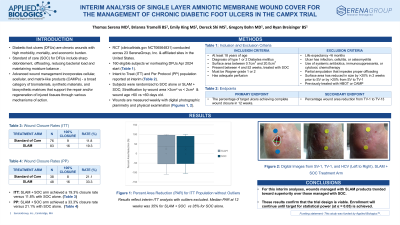
Introduction: Diabetic foot ulcers (DFUs) remain one of the most persistent and debilitating complications associated with diabetes, leading to significant health consequences, reduced quality of life, and substantial healthcare costs. Although treatment options have improved, many ulcers still do not fully close under the current standard of care (SOC). These challenges highlight the ongoing need for therapies that are both effective and economically sustainable.
Methods: This multicenter, randomized controlled clinical trial assessed whether supplementing SOC with single-layer amniotic membrane (SLAM) improved healing outcomes compared with SOC alone in patients with chronic, nonhealing DFUs. The primary outcome was complete ulcer closure over a 12-week treatment period. Wounds were considered closed when full re-epithelialization without drainage for two consecutive weekly assessments was achieved, verified by an independent, blinded review panel. Additional analyses included weekly evaluations of percent area reduction (PAR) from TV-1 to TV-13 using both digital planimetry and clinical examination.
Results: In the Intent-to-Treat (ITT) cohort, 17.9% of participants receiving SLAM plus SOC achieved full closure, compared with 11.3% in the SOC group; a higher difference favoring SLAM plus SOC was observed in the Per-Protocol (PP) population (31.2% SLAM plus SOC, 21.4% SOC). PAR analyses further indicated that the SLAM-treated group experienced greater median reduction in wound size over the study period in both ITT (31.6% vs 20.0%) and PP (69.2% vs 55.1%) populations.
Discussion: Findings from this interim analysis indicate that adjunctive treatment with SLAM may offer meaningful clinical benefit for patients with chronic DFUs. The consistent trend toward improved closure and enhanced wound-area reduction suggests that SLAM could represent a valuable addition to SOC, warranting continued investigation in larger and longer-term studies.

.jpg)