
.jpg)
Case Series/Study
Autologous fat grafting is commonly used for aesthetic and reconstructive surgery of the breast and other areas in attempts to reverse long term effects of radiation and scar. The value of autologous minimally manipulated homologous adipose tissue (AMHAT) has been described as a potential source of stimulation of proliferative and interactive cells. However, techniques have been limited to allow for practical use.1
(AMHAT) fabricated using three-dimensional (3D) bioprinting has shown potential in
the treatment of diabetic foot ulcers and other chronic wounds.2-7 Is adipose the holy grail for soft tissue repair? 3D printing utilizing bioinks to create a customized adipose graft for a patient is the ultimate personalization of point of care and indeed may be the future.
Methods:
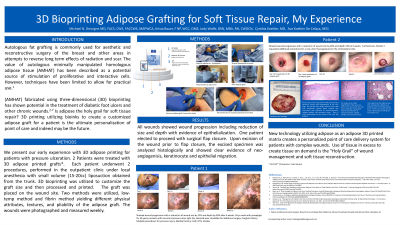
We present our early experience with 3D adipose printing for patients with pressure ulceration. 2 Patients were treated with 3D adipose printing. Each patient underwent 2 procedures, performed in the outpatient clinic under local anesthesia with small volume (15-20cc) liposuction obtained from the trunk. 3D bioprinting was utilized to customize the graft size and then processed and printed. The graft was placed on the wound site. Two methods were utilized, low-temp method and fibrin method yielding different physical attributes, textures, and pliability of the adipose graft. The wounds were photographed and measured weekly.
Results:
All wounds showed wound progression including reduction of size and depth with evidence of epithelialization. One patient elected to proceed with surgical flap closure. Upon excision of the wound prior to flap closure, the excised specimen was analyzed histologically and showed clear evidence of neoangiogenisis, keratinocyte and epithelial migration.
Patient 1. showed wound progression with a reduction of wound size by 23% and depth by 38% after 6 weeks.
Patient 2. Showed wound progression with a reduction of wound size by
40% and depth 33% at 6 weeks. Furthermore, Patient 2 requested additional procedures for a new ulcer that appeared on the contralateral side.
Discussion:
New technology utilizing adipose as an adipose 3D printed matrix creates a personalized point of care delivery system for patients with complex wounds. Use of tissue in excess to create tissue on demand is the “Holy Grail” of wound management and soft tissue reconstruction.