
.jpg)
Case Series/Study
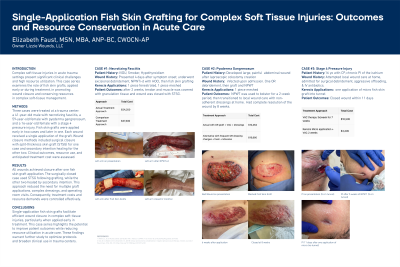
Complex soft tissue injuries in acute trauma settings present significant clinical challenges and high resource utilization. This case series examines the role of fish skin grafts, applied early or during treatment, in promoting wound closure and conserving resources in complex soft-tissue management.
Three cases were treated at a trauma center: a 41-year-old male with necrotizing fasciitis, a 59-year-old female with pyoderma gangrenosum, and a 16-year-old female with a stage 4 pressure injury. Fish skin grafts were applied early in two cases and later in one. Each wound received a single application of the graft. Wound closure methods included surgical closure with split-thickness skin graft (STSG) for one case and secondary intention healing for the other two. Clinical outcomes, resource use, and anticipated treatment cost were assessed.
All wounds achieved closure after one fish skin graft application. The surgically closed case used STSG following grafting, while the other two healed by secondary intention. This approach reduced the need for multiple graft applications, complex dressings, and operating room visits. Consequently, treatment costs and resource demands were controlled effectively.
Single-application fish skin grafts facilitate efficient wound closure in complex soft-tissue injuries, particularly when applied early in treatment. This case series highlights the potential to improve patient outcomes while reducing resource utilization in acute care. These findings warrant further study to optimize protocols and broaden clinical use in trauma centers.