(CS-158) Use of a Icelandic Fish Skin Xenograft in the Treatment of an Exposed Tibialis Anterior Tendon in a Chronic Lower Extremity Wound with adjunctive NPWT
Friday, April 10, 2026
Introduction: Chronic lower extremity wounds with exposed tendon represent a significant challenge, particularly in patients with multiple comorbidities. Peripheral vascular disease and long-term tobacco usage are well-recognized risk factors for delayed healing due to compromised perfusion, impaired oxygen delivery and chronic inflammatory changes.
This case involves a 61 year old male with a history of PVD and 30-year smoking history who presented due to a chronic lower extremity wound with a fully exposed Tibialis Anterior tendon. He has failed multiple rounds of conservative therapies, including standard local wound care. Despite these treatments, the wound failed to progress and eventually deteriorated to a point of potential limb loss.
Advanced biologic wound therapies have emerged as an important adjunct in the treatment of complex non-healing wounds. Icelandic fish skin matrices are decellularized xenograft rich in Omega-3 fatty acids and structurally similar to human dermis, offering a scaffold that supports granulation tissue formation while minimizing inflammatory response. This case study highlights the use of an Icelandic fish skin substitute in facilitating granulation and wound progression in a high-risk patient with a fully exposed Tibialis Anterior tendon.
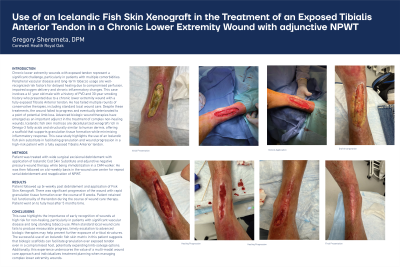
Methods: Patient was treated with wide surgical excisional debridement with application of Icelandic Cod Skin Substitute and adjunctive negative pressure wound therapy, while being immobilization in a CAM walker. He was then followed on a bi-weekly basis in the wound care center for repeat serial debridement and reapplication of NPWT.
Results: Patient followed up bi-weekly post debridement and application of Fisk Skin Xenograft. There was significant progression of the wound with rapid granulation tissue formation over the course of 8 weeks. Patient retained full functionality of the tendon during the course of wound care therapy. Patient went on to fully heal after 5 months time.
Discussion: This case highlights the importance of early recognition of wounds at high risk for non-healing, particularly in patients with significant vascular disease and long standing tobacco use. When standard local wound care fails to produce measurable progress, timely escalation to advanced biologic therapies may help prevent further exposure of critical structures.
The successful use of an Icelandic fish skin matrix in this patient suggests that biologic scaffolds can facilitate granulation over exposed tendon even in a compromised host, potentially expanding limb-salvage options. Additionally, this experience underscores the value of a multi-modal wound care approach and individualizes treatment planning when managing complex lower extremity wounds.

.jpg)