
.jpg)
Case Series/Study
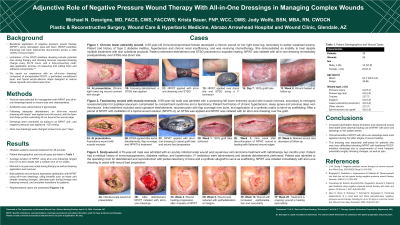
Beneficial application of negative pressure wound therapy (NPWT) using reticulated open-cell foam (ROCF)-interface dressings has been extensively documented across a wide variety of wound types.1 However, limitations of the ROCF-interface dressing include potential pain during therapy and dressing removal, required dressing change every 48-72 hours, and a time-consuming multi-step application process of measuring and cutting foam and adhesive components.2,3 We report our experience with an all-in-one dressing4 composed of encapsulated ROCF, a perforated nonadherent layer, and hybrid acrylic-silicone drape designed to reduce tissue ingrowth and extend wear time.
Methods:
Wounds were selected for management with NPWT and all-in-one dressings based on wound size and characteristics. Antibiotics were administered if appropriate. Following adequate debridement, an all-in-one wound dressing with drape was applied over the wound, with the foam and drape portion extending at least 5 cm beyond the wound edge. Dressings were connected via tubing to the NPWT unit, and negative pressure was applied at -125 mmHg. All-in-one dressings were changed at least once per 7 days.
Results:
Nineteen patients (8 female and 11 male; age range: 34-86) with 22 wounds were treated. All-in-one dressings were applied to acute (n=1), surgical (n=4), and chronic wounds (n=13), as well as over split-thickness skin grafts (n=4). Average duration of NPWT using all-in-one dressings ranged from 0.5 to 48.0 weeks with a median time of 4.0 weeks. Minimal to no pain was noted during therapy as well as dressing application and removal. Both patients and clinicians expressed satisfaction with NPWT using all-in-one dressings, citing benefits such as fewer and simpler dressing changes, alleviated pain during therapy and dressing removal, and smoother transitions for patients.
Discussion:
Increased granulation tissue formation and enhanced wound bed health were observed during use of NPWT with all-in-one dressings in this patient series. Clinical benefits of NPWT with all-in-one dressings were particularly apparent during the latter stages of wound healing. This dressing was especially well-suited for patients who may have difficulties tolerating NPWT with traditional ROCF-interface dressings due to requirements of more frequent, potentially lengthy dressing changes, as well as pain.