
.jpg)
Case Series/Study
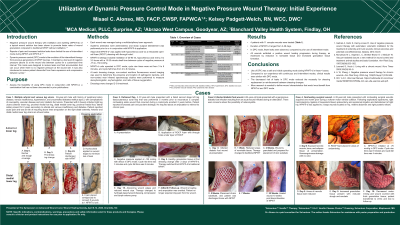
Negative pressure wound therapy with instillation and dwelling (NPWTi-d) of a topical wound solution assists in removing nonviable tissue in infected wounds and has been shown to promote faster rates of wound granulation compared to traditional NPWT without instillation.1 There is also evidence that intermittent cycles of negative pressure may result in enhanced rates of granulation tissue formation compared to continuous negative pressure.2 However, reports of pain and increased solution leaks have limited the use of intermittent mode during NPWT and NPWTi-d.3,4 Dynamic pressure control (DPC) mode is an evolution noncontinuous mode that provides a high and low pressure (above 0) for a customized time interval.5 The purpose of this series was to assess the feasibility of using DPC mode in conjunction with NPWTi-d, a combination that has not been documented in prior publications.
Methods:
Adjunctive NPWTi-d was applied with hypochlorous acid via a reticulated open-cell foam (ROCF) dressing. Systemic antibiotics were administered, and sharp surgical debridement was performed prior to or in conjunction with NPWTi-d application. NPWTi-d settings included instillation of 20-90 mL hypochlorous acid every 2 to 3.5 hours with a 10-20 minute dwell time between cycles of negative pressure at -75 to -150 mmHg. NPWTi-d units operated in DPC mode; cycle rise times were 3 minutes for 9/11 wounds and 8 minutes for 2/11 wounds; cycle fall times were 3 minutes for 9/11 wounds and 4 minutes for 2/11 wounds. Dressings were changed 2-3 times/week. Therapy was stepped down to traditional NPWT when patient was discharged and/or wound bed was covered with clean granulation tissue.
Results:
Four male patients (age range: 20-63) with 11 complex wounds (surgical [n=4] and arterial/diabetic ulcer [n=7]) were treated. Duration of NPWTi-d ranged from 3-28 days. All wounds exhibited a positive wound healing progression during therapy, as evidenced by reduction in nonviable tissue and increased granulation tissue formation. In DPC mode, there were fewer observed leaks compared to prior use of intermittent mode.
Discussion:
Use of DPC was a safe and viable operating mode during NPWTi-d in these 4 cases. Compared to our experience with continuous and intermittent modes, clinical results were similar with DPC mode. The decreased risk of leaks in DPC mode reduced the necessity for dressing replacement or reinforcement between dressing changes. More research is needed to define wound characteristics that would most benefit from NPWTi-d and DPC mode.