
.jpg)
Clinical Research
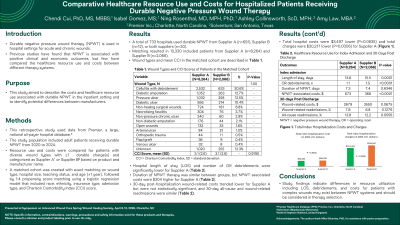
Durable negative pressure wound therapy (NPWT) is used in hospitals for acute and chronic wounds. While NPWT is associated with positive clinical and economic outcomes, few studies have evaluated differences in healthcare resource use and economic impact between different therapy systems. This study aimed to compare the healthcare resource utilization and costs for patients treated with devices from two durable NPWT suppliers.
Methods:
This retrospective study used the Premier Healthcare Database*, a large, national, all-payer hospital database. Adult patients treated with durable NPWT from Supplier A§ or B† between 2020-2024 were included if they had not received NPWT within 180 days or disposable or abdominal NPWT. Patients were assigned to Supplier A or B based on the NPWT product used. A matched cohort was created with exact matching on wound type, hospital size, teaching status, and age (±1 year), followed by 1:4 propensity score matching using a logistic regression model that included race, ethnicity, insurance type, admission type, and Charlson Comorbidity Index score.
Results:
A total of 733 hospitals used durable NPWT from Supplier A (n=691), Supplier B (n=12), or both suppliers (n=30). A total of 10,330 patients were included in the matched cohort (Supplier A: n=8,264; Supplier B: n=2,066). Length of stay was 1.73 days shorter for patients treated with Supplier A than Supplier B (13.77 vs. 15.5 days, p=0.0001). Duration of NPWT therapy was similar between groups (7.25 vs. 7.37 days, p=0.6346). NPWT-associated costs were $304 higher for Supplier A (p< 0.0001). The average number of operating room debridement procedures was lower for Supplier A (1.1 vs. 1.45, p< 0.0001). Total hospital costs were $3,497 lower for Supplier A, although not statistically significant (p=0.0635), and total charges were $30,217 lower (p=0.0006). Thirty-day post-hospitalization wound-related costs trended lower for Supplier A but were not statistically significant, and 30-day all-cause and wound-related readmissions were similar between suppliers.
Discussion: Study findings indicate differences in resource utilization, including length of stay, debridements, and costs between patients treated with durable NPWT systems from two suppliers. These differences should be considered in clinical and economic decision-making when selecting therapy for patients with complex wounds.