
.jpg)
Health Economics
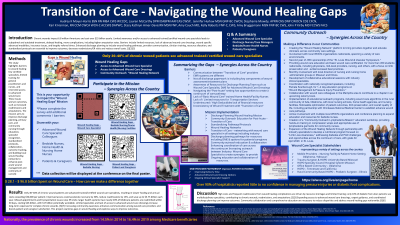
Chronic wounds impact 6.8 million Americans and cost over $25 billion yearly. Limited awareness and/or access to advanced trained/certified wound care specialists leads to suboptimal and outdated treatment, delayed healing, more complications, including higher amputation rates. Barriers include limited resources, lack of advanced wound care dressings, wound specific advanced modalities, insurance issues, and lengthy referral times. Enhanced discharge planning to include wound healing pathways, provider communication, clinician training, resource allocation, and standardized protocols are essential to improve outcomes, decrease readmissions/ER visits and reduce overall costs.[1][2][3]
Methods:
The study highlights barriers to wound healing: few certified specialists, limited training for general practitioners and nurses, and restricted access to advanced wound care. These issues worsen outcomes, such as increased readmissions and amputations. The mission aims to improve discharge planning, primary care, and community nursing through education, specialist recognition, standardized protocols, collaboration, outcome tracking, and building local wound healing networks to enhance post-acute wound management and continuity of care.[6]
Results:
Only 30–40% of chronic wound patients see advanced trained/certified wound care specialists, resulting in slower healing and annual costs exceeding $34,000 per patient. Improved access could accelerate recovery by 30%, reduce readmissions by 15%, and save up to $3.75 billion each year. Missed appointments and transportation issues raise ER visits; larger health systems have nearly 20% of Medicare patients are readmitted within 30 days, costing $26 billion, with $17 billion potentially avoidable. Limited specialists and lack of access to advanced wound care dressings increase long-term expenses for complex chronic wounds. [6][7]
Increasing community awareness enhances communication among wound care providers and boosts patient and caregiver satisfaction. This project examines gaps in wound healing and explores ways to improve outcomes.
Discussion:
High costs and frequent readmissions from wound healing complications are driven by resource shortages and limited training; only 10% of diabetic foot ulcer patients see multidisciplinary specialists, contributing to chronic wounds, readmissions, and amputations.[2][3] Expanding access to advanced wound care dressings, expert guidance, and coordinated discharge planning can improve outcomes. Community collaboration and comprehensive education are necessary to reduce disparities and address wound healing gaps nationwide.[5][6]